
Wedding story · Bodega Dos Búhos, San Miguel de Allende
Getting Married in San Miguel de Allende: A Documentary Photographer’s Guide
A rainy night under the arcades, a sunny day at a vineyard, and everything I’ve learned about getting married in San Miguel.
I have photographed weddings in San Miguel de Allende for years, and I still stop in the middle of the street just to look. Pink stone, iron balconies, bells that ring at odd hours. If you are planning a wedding here, you can probably already picture it. This guide is about the other part: the venues and what they do to the light, the season, the traditions, the travel, and how to plan a day that feels like yours instead of a production.
I’ll tell it through one couple, Susy and Rafa, who got married at Bodega Dos Búhos, a vineyard just outside town. Their wedding had a little of everything San Miguel can give you: rain, sun, music in the street, a vineyard, and a lot of very good food and drink. It answers most of the questions couples ask me about getting married here.
Susy and Rafa: a wedding that started with a glass of wine
The message that started it
Most of my weddings begin with an email. This one began like this (translated from Spanish):
“We’re getting married next year in San Miguel de Allende, at a vineyard. I’m a photographer myself, and I love your style because it’s so different from everything else out there. I don’t want posed or artificial photos with a thousand flashes, I don’t want magazine photos. I want to feel again, every time I look at them, what I felt that day.”
Susy is a nutritionist and a photographer of newborns in her free time. Rafa studied communication, runs a small pharmaceutical company and is an amateur chef who, according to Susy, cooks deliciously. Both collect experiences more than things: art, museums, travel, good food, long conversations with friends. And wine, especially Mexican wine.
How they met
When I asked how they met, the answer was the best short story I’ve received in a questionnaire. Susy was having dinner with her father in a small Italian restaurant. At the next table, Rafa and three friends were talking loudly about a Mexican wine. She asked which wine it was; Rafa sent two glasses over. She asked who distributed it; his friends pointed at Rafa. He asked for her email “to send her some information.” By the time she left the restaurant, there was already an email from him asking for her phone number.
Three months later they were a couple. Ten months later they were engaged. A wedding at a vineyard was never really a choice. It was the only possible ending.
“A session before the ceremony feels artificial”
In my questionnaire I ask couples what they think about doing portraits before the ceremony. Susy’s answer: it feels a bit artificial, unless it’s an engagement session weeks before. That’s exactly how I work. I don’t take couples away from their own wedding for an hour of poses. They wanted eight to ten hours of coverage, a ceremony at one in the afternoon and two hundred guests, and they wanted all of it told as it happened.
The welcome party: a callejoneada that the rain changed
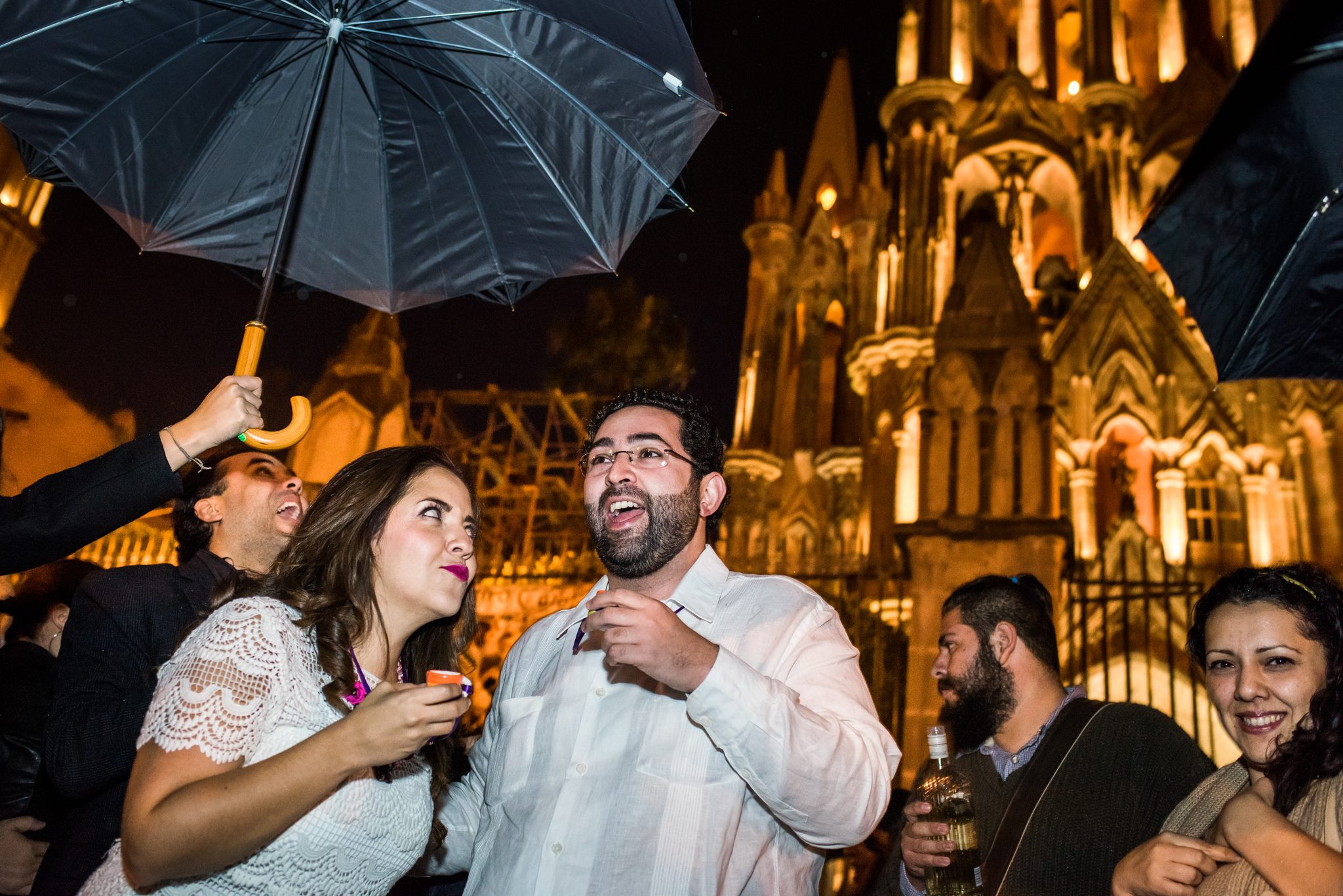
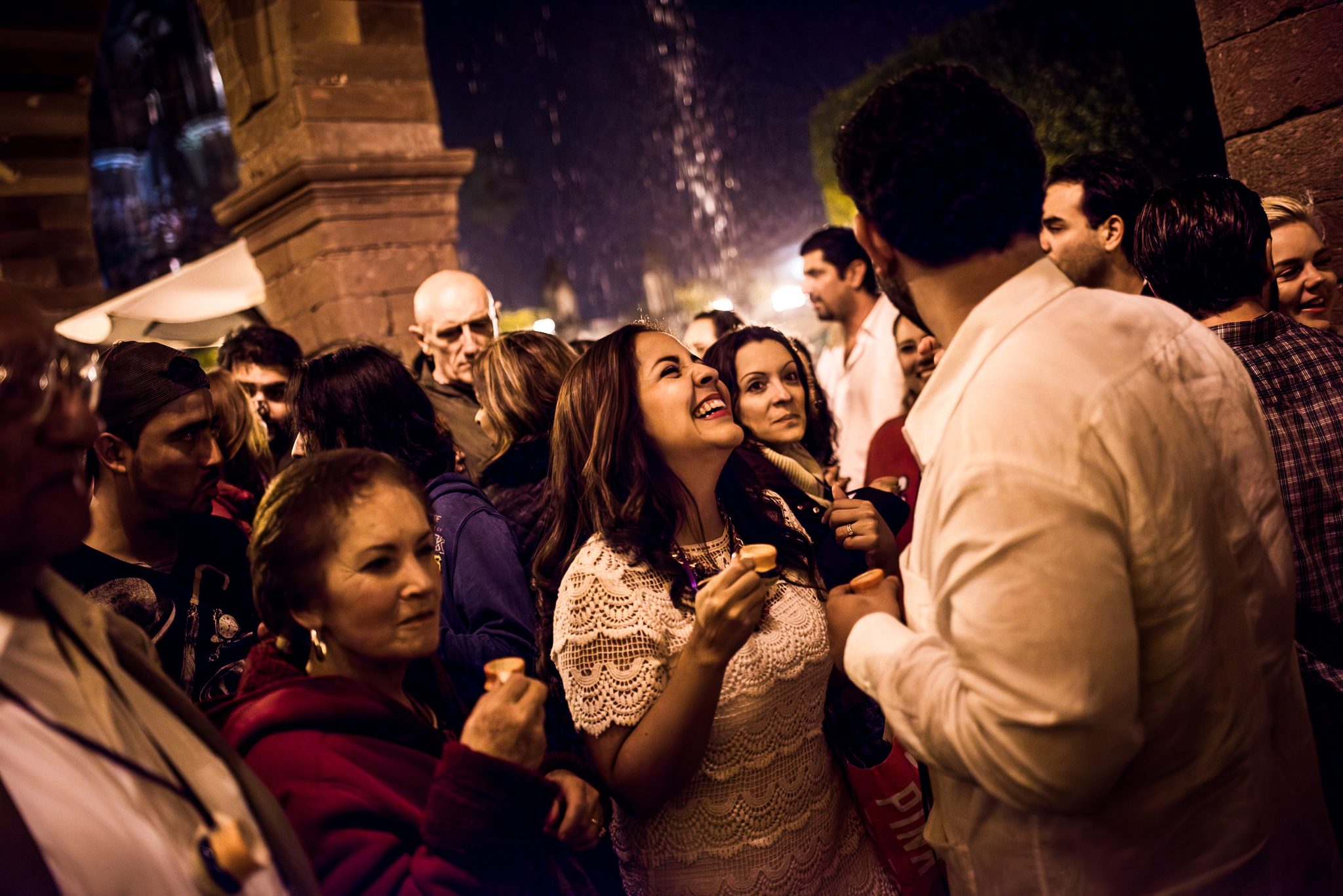
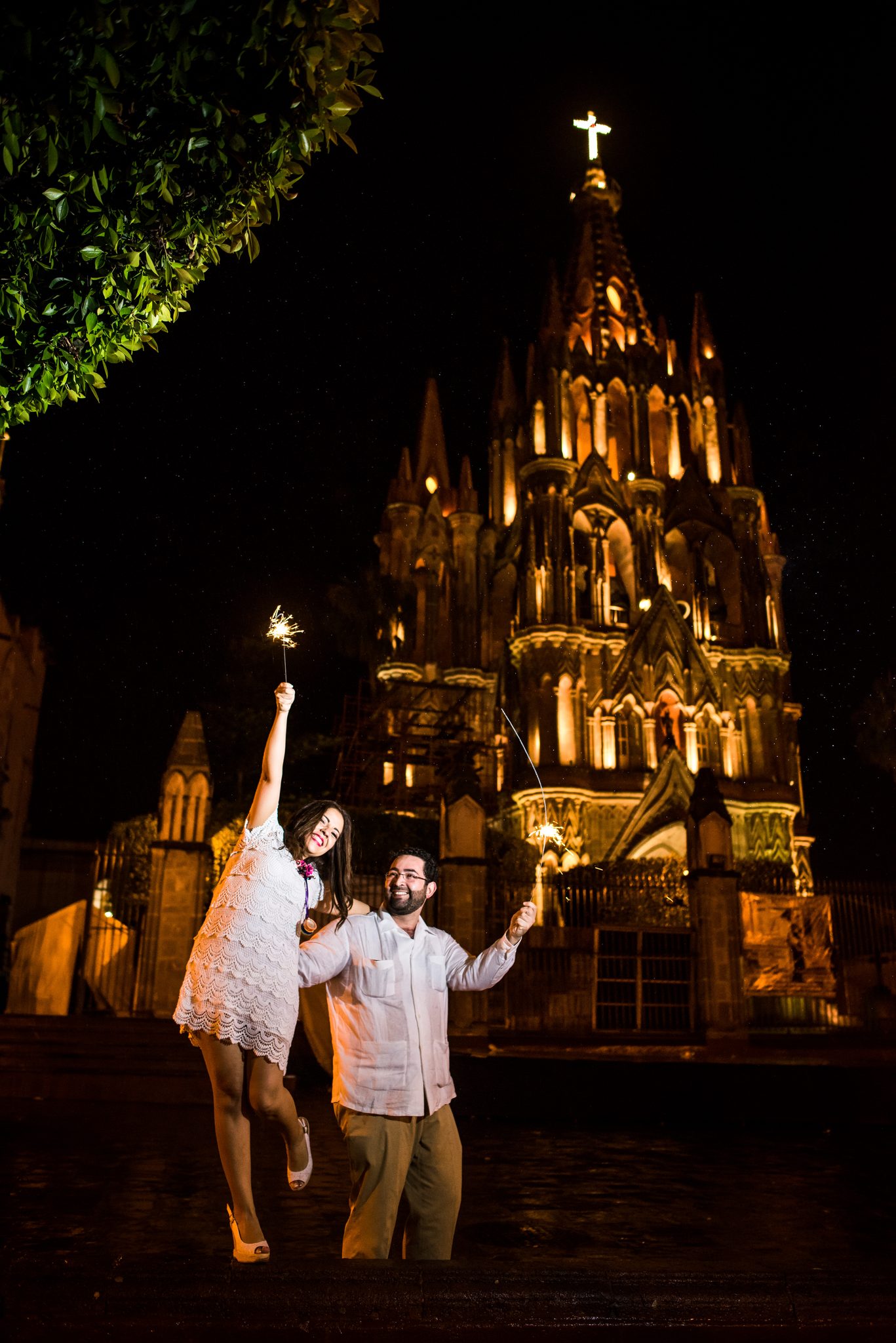
The weekend started the night before the wedding, in the Jardín, in front of the Parroquia. The plan was a callejoneada: musicians, mojigangas and the guests walking through the streets of the old town. Then it rained, the way it rains in San Miguel in summer, hard and all at once.
Nobody went home. The party simply moved under the arcades around the square. Umbrellas open, tequila going around, the musicians playing, the mojigangas dancing a few centimeters from everyone’s face. It was one of the best welcome parties I have photographed, and it happened because the plan failed.
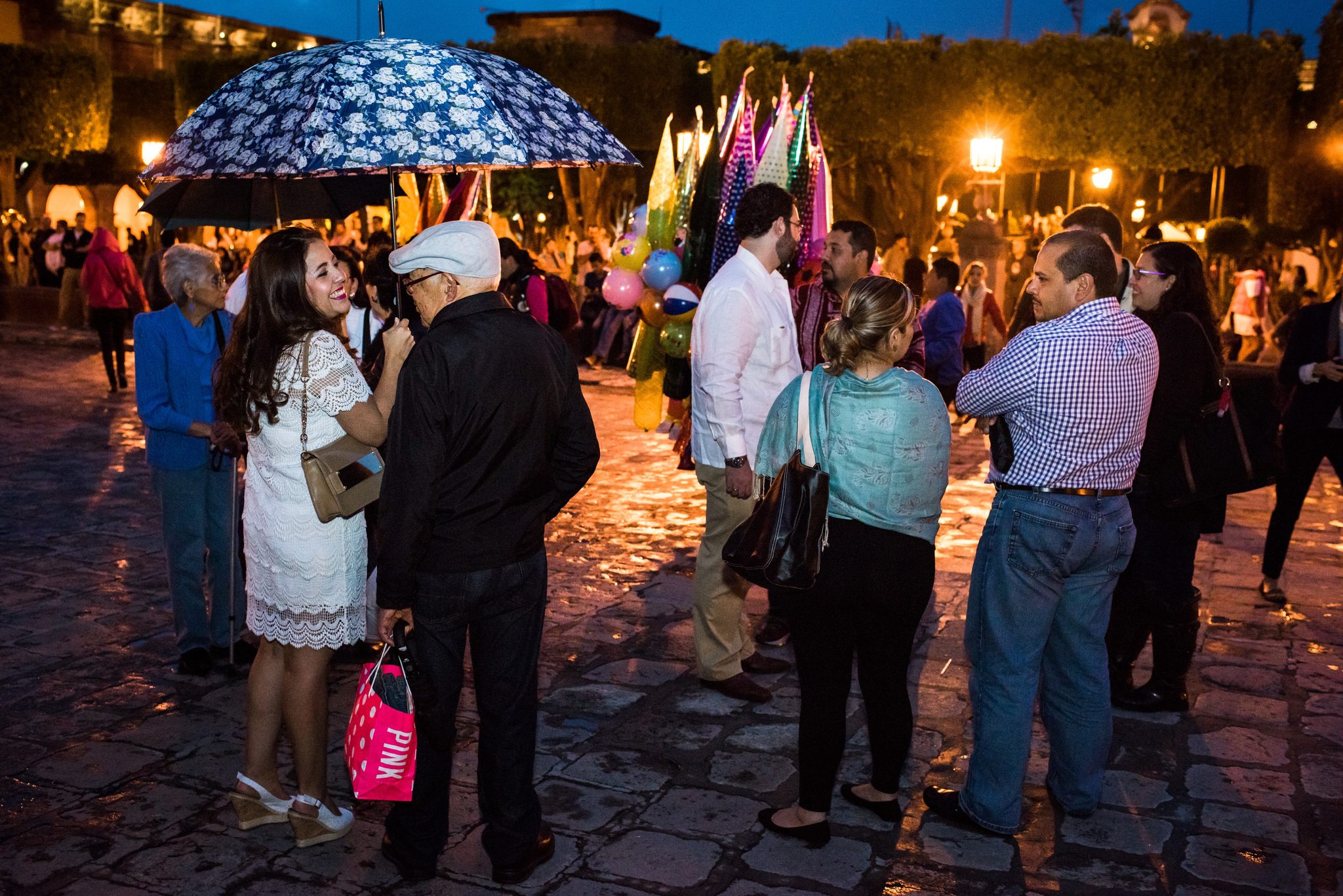
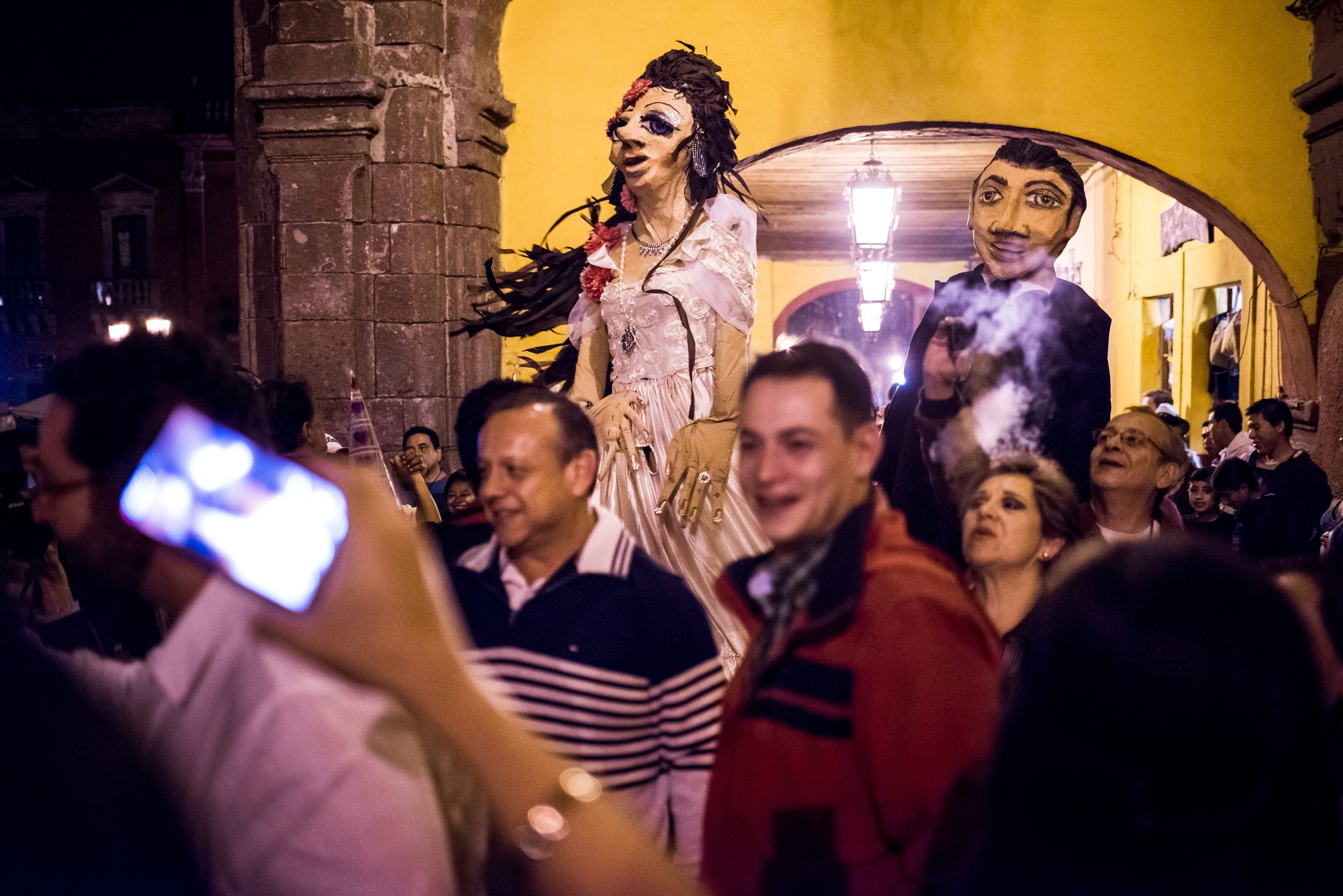
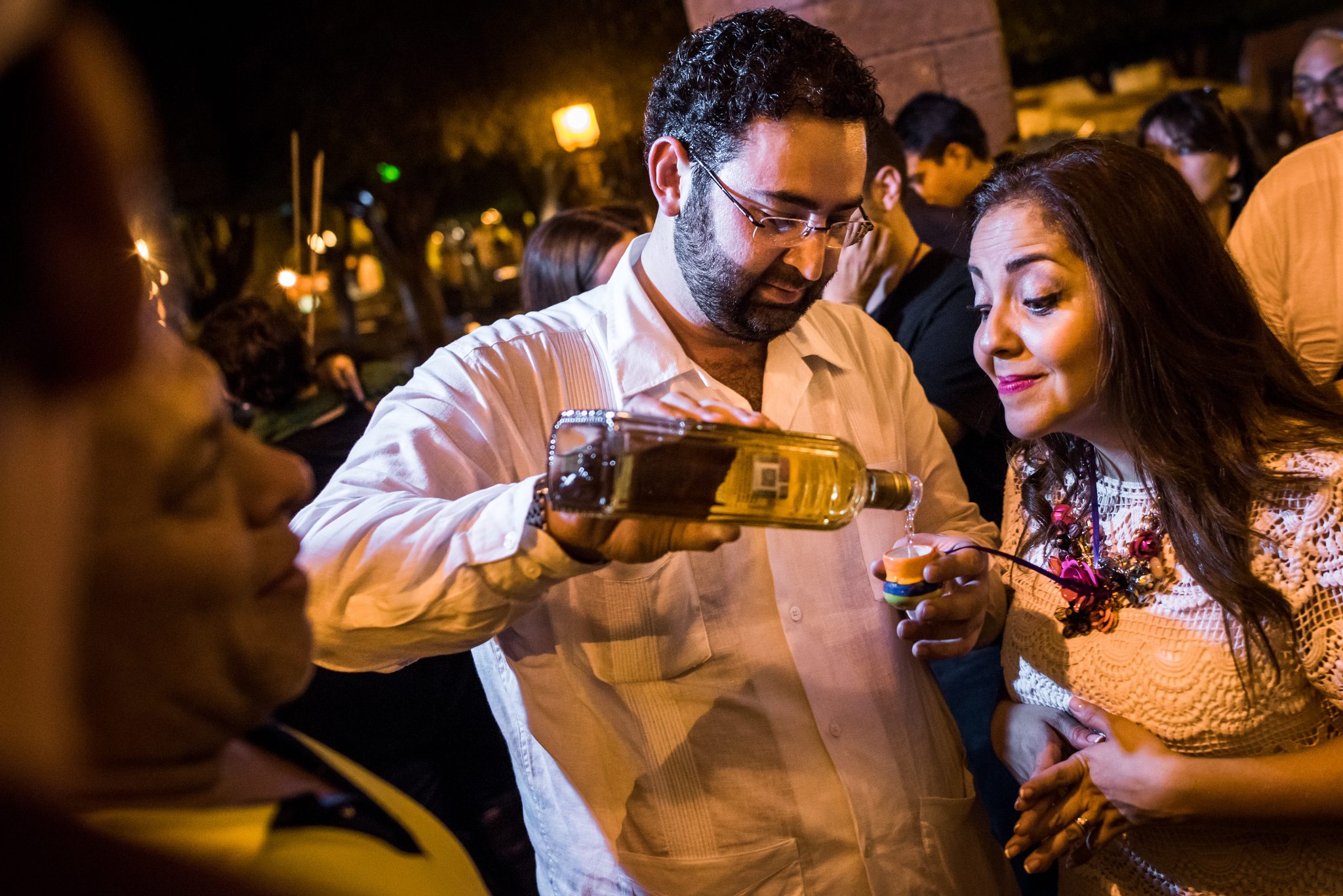
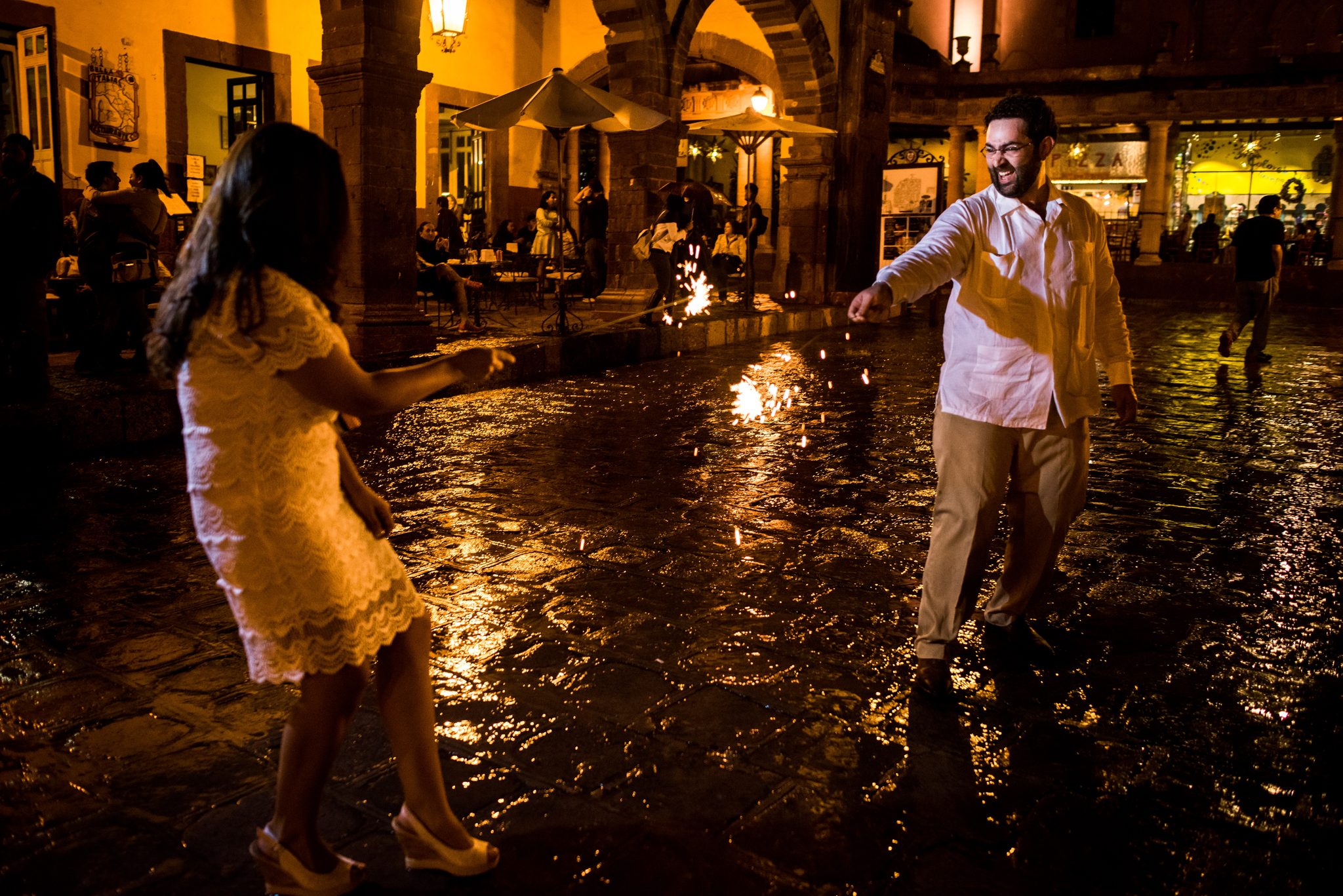
When the rain eased, Susy and Rafa walked out onto the wet cobblestones and danced in the middle of the square, with the lights of the arcades reflected under their feet.
The wedding day at Bodega Dos Búhos
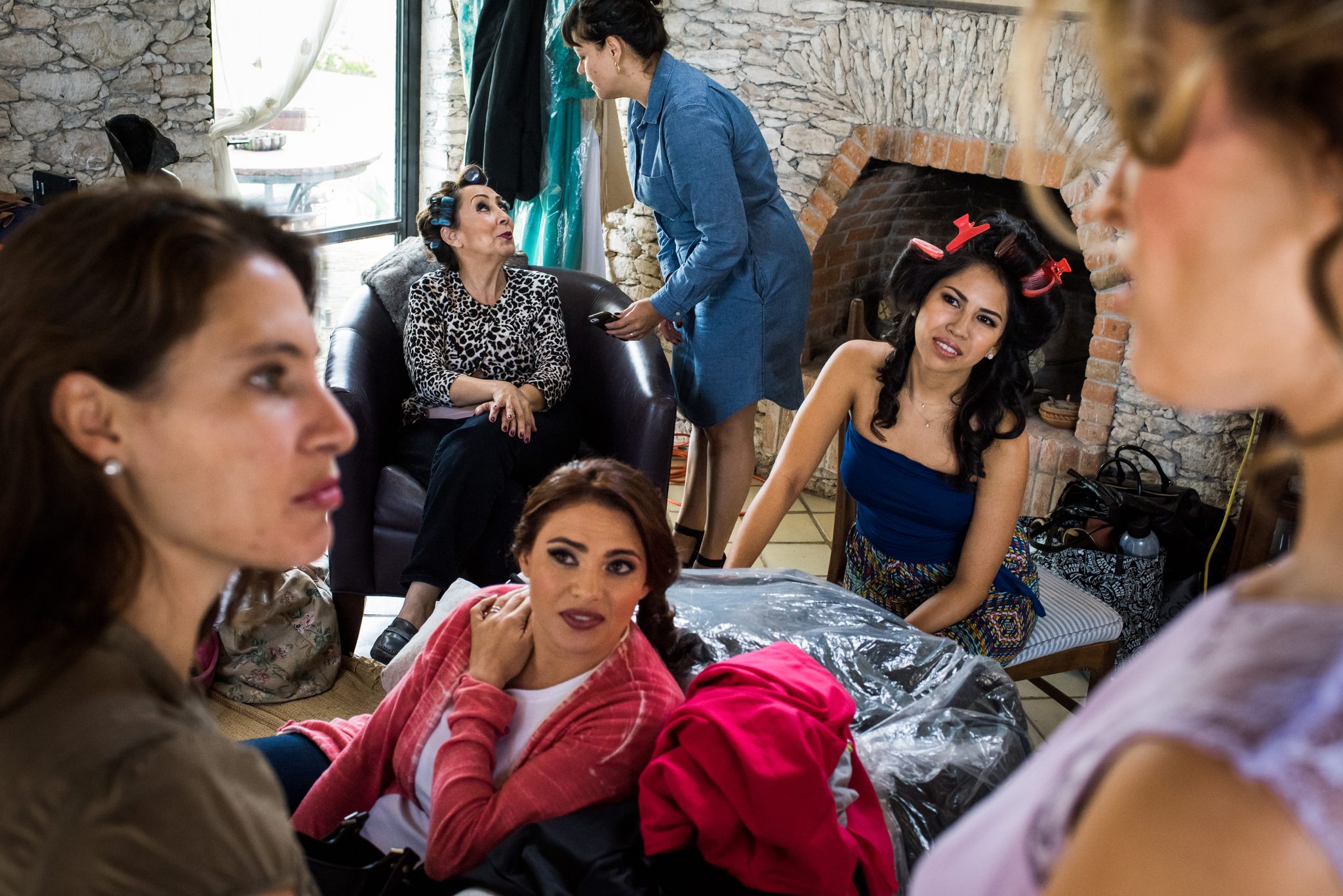
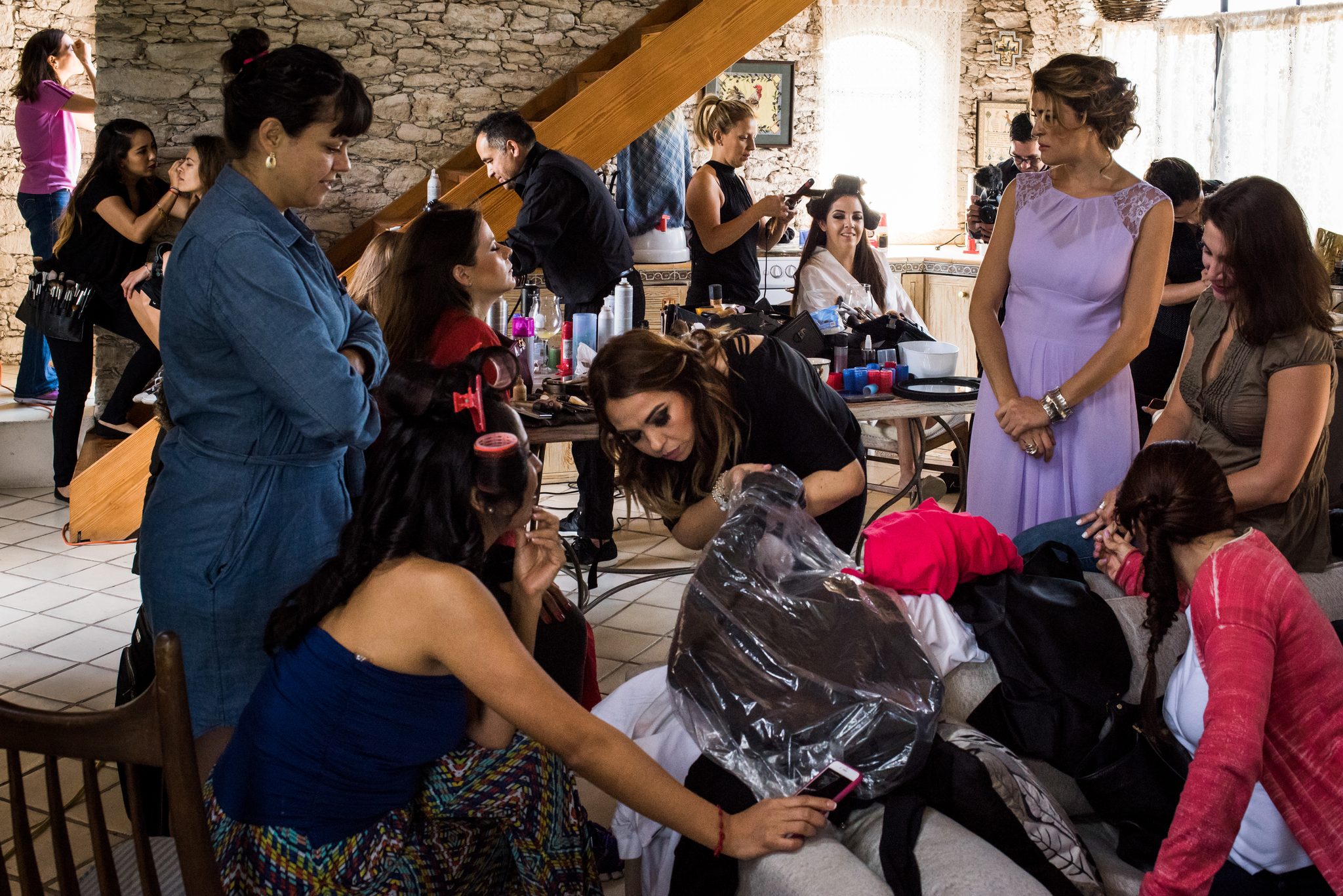
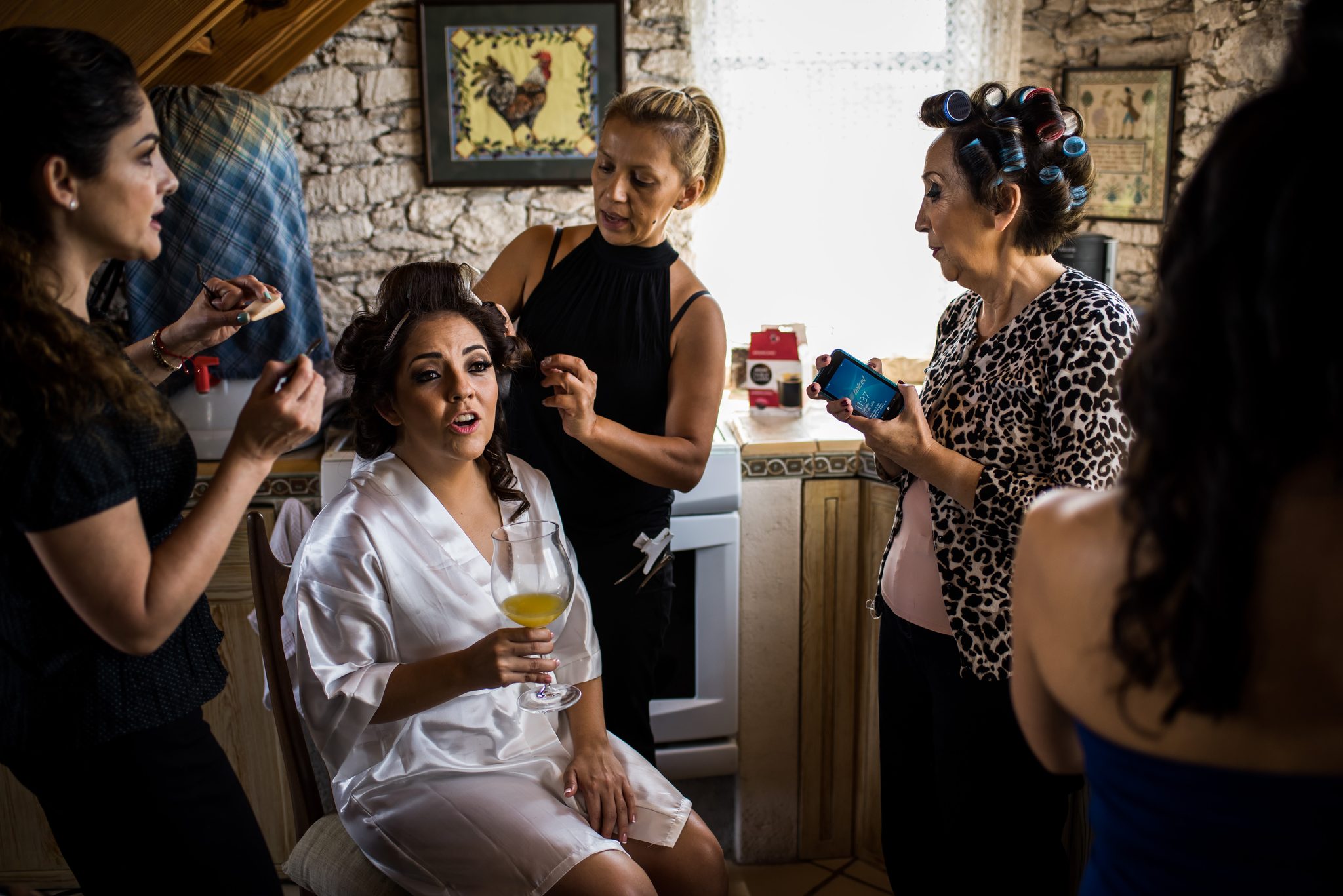
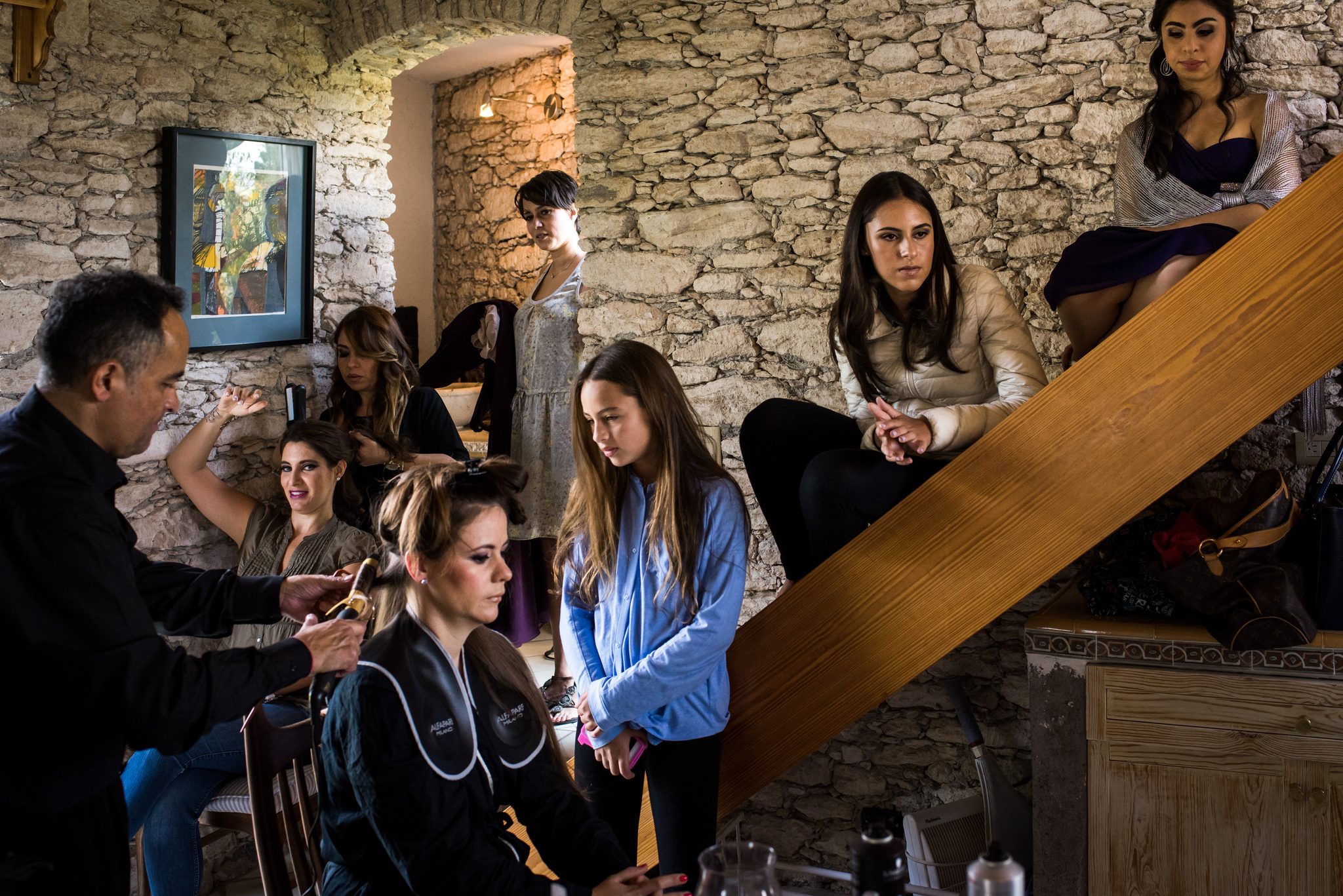
The next day the sky was clear and the sun was strong. Susy got ready with her family and friends in a stone house full of light, with the usual and wonderful chaos of hair, makeup, a glass in hand and a lot of laughter.
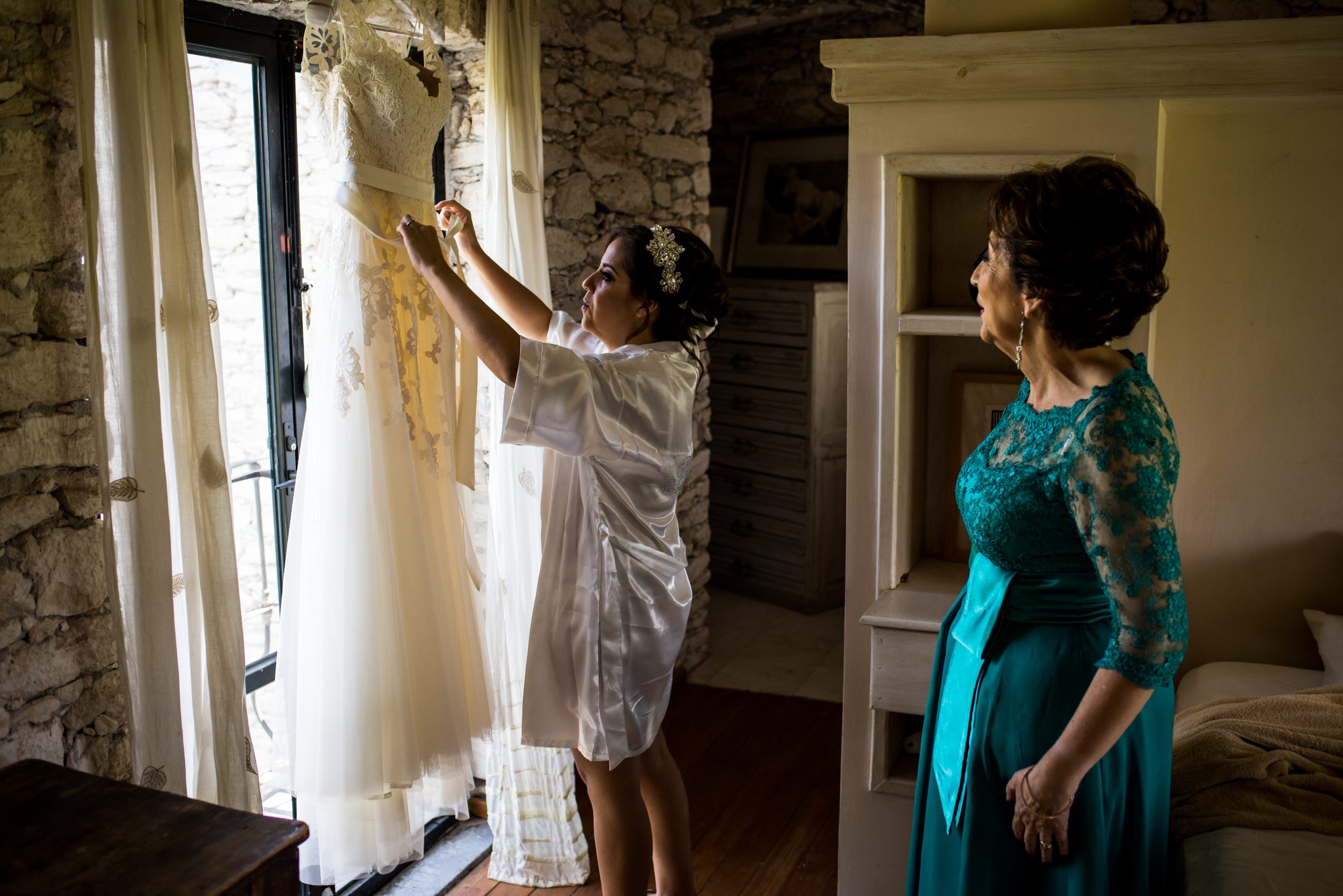
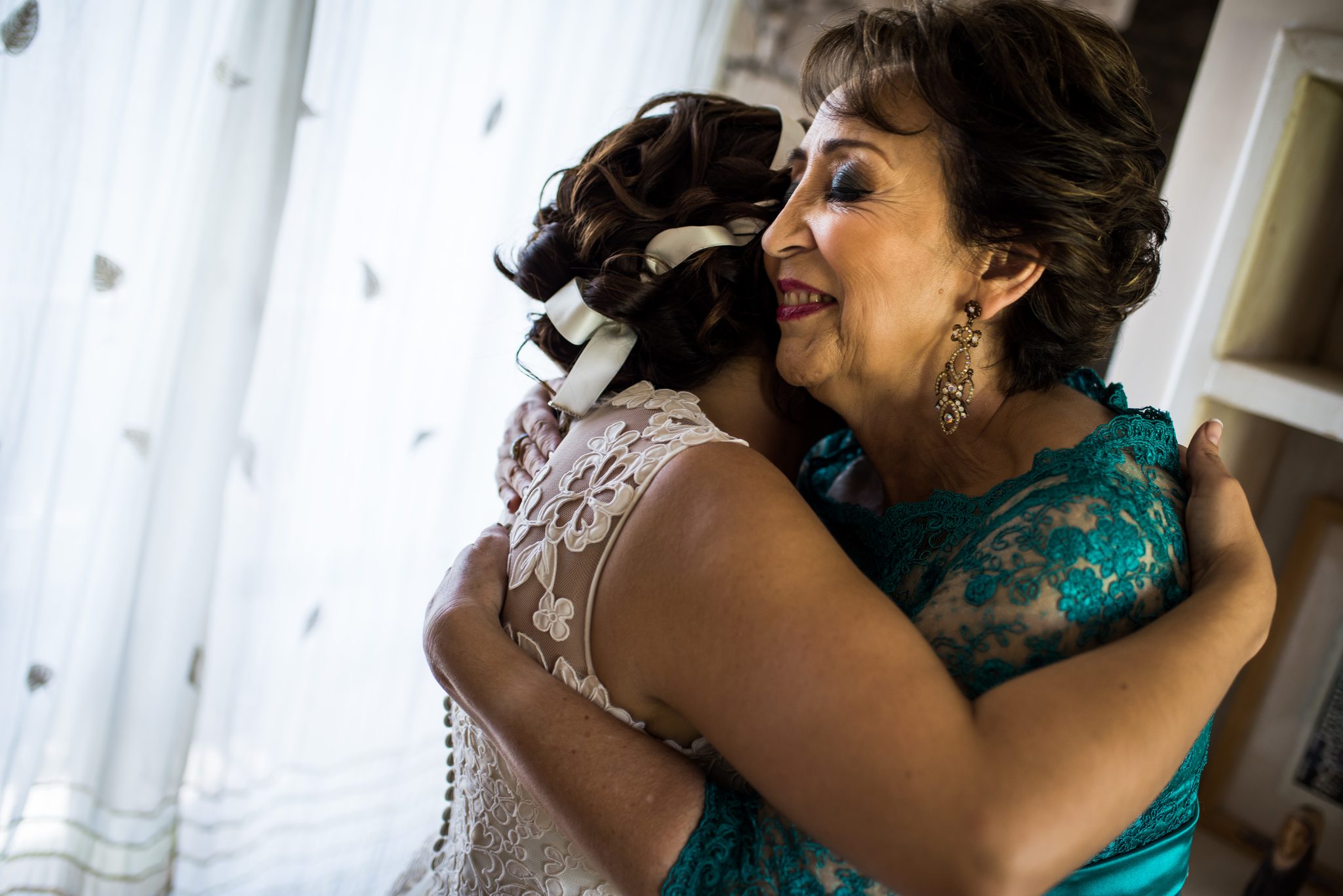
Then the dress, and a long hug before leaving.
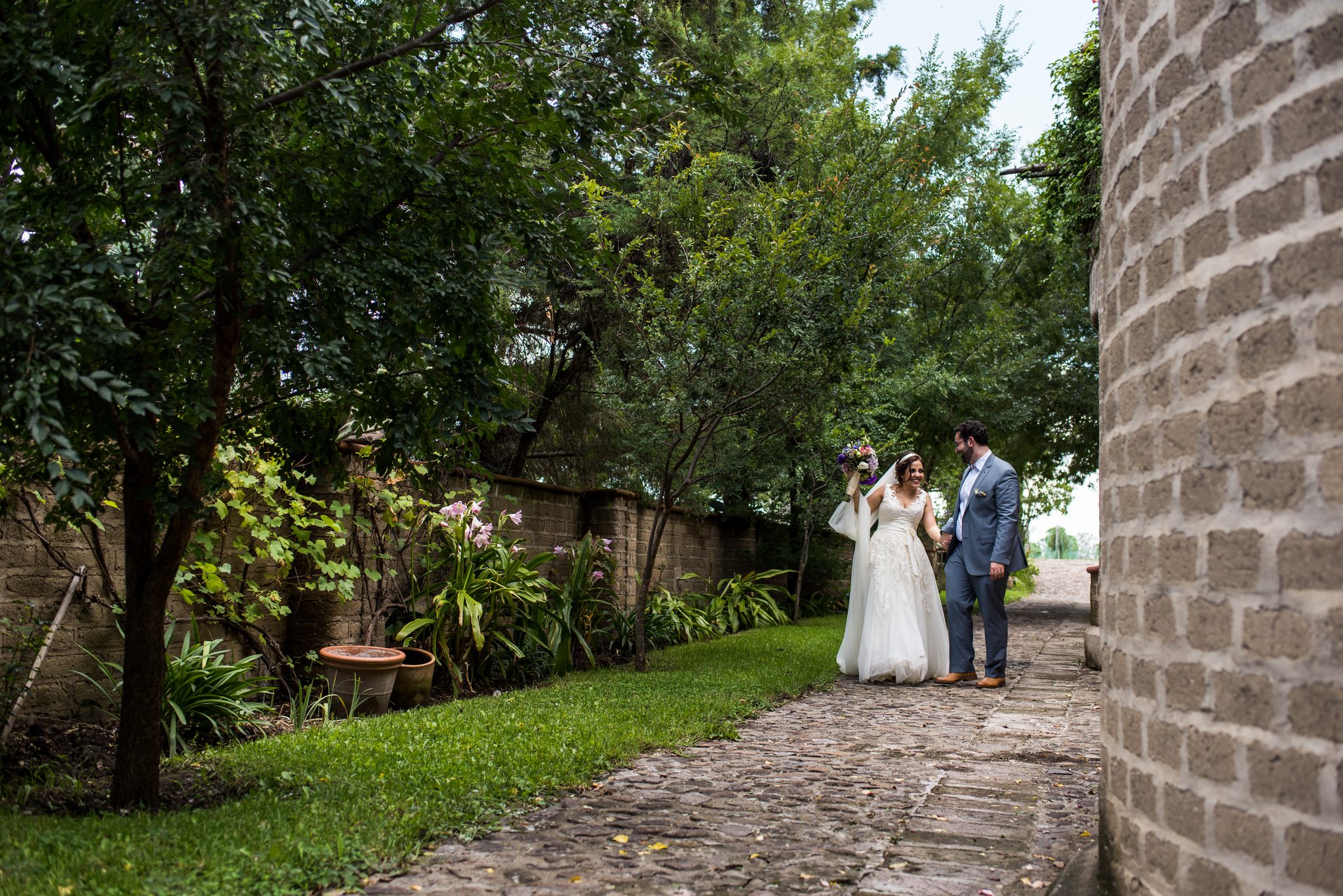
She arrived at the ceremony with her father, in a carriage pulled by two white horses and driven by a charro, crossing a field of nopales. He held a white paper parasol over her, because a one o’clock ceremony in summer means real sun.
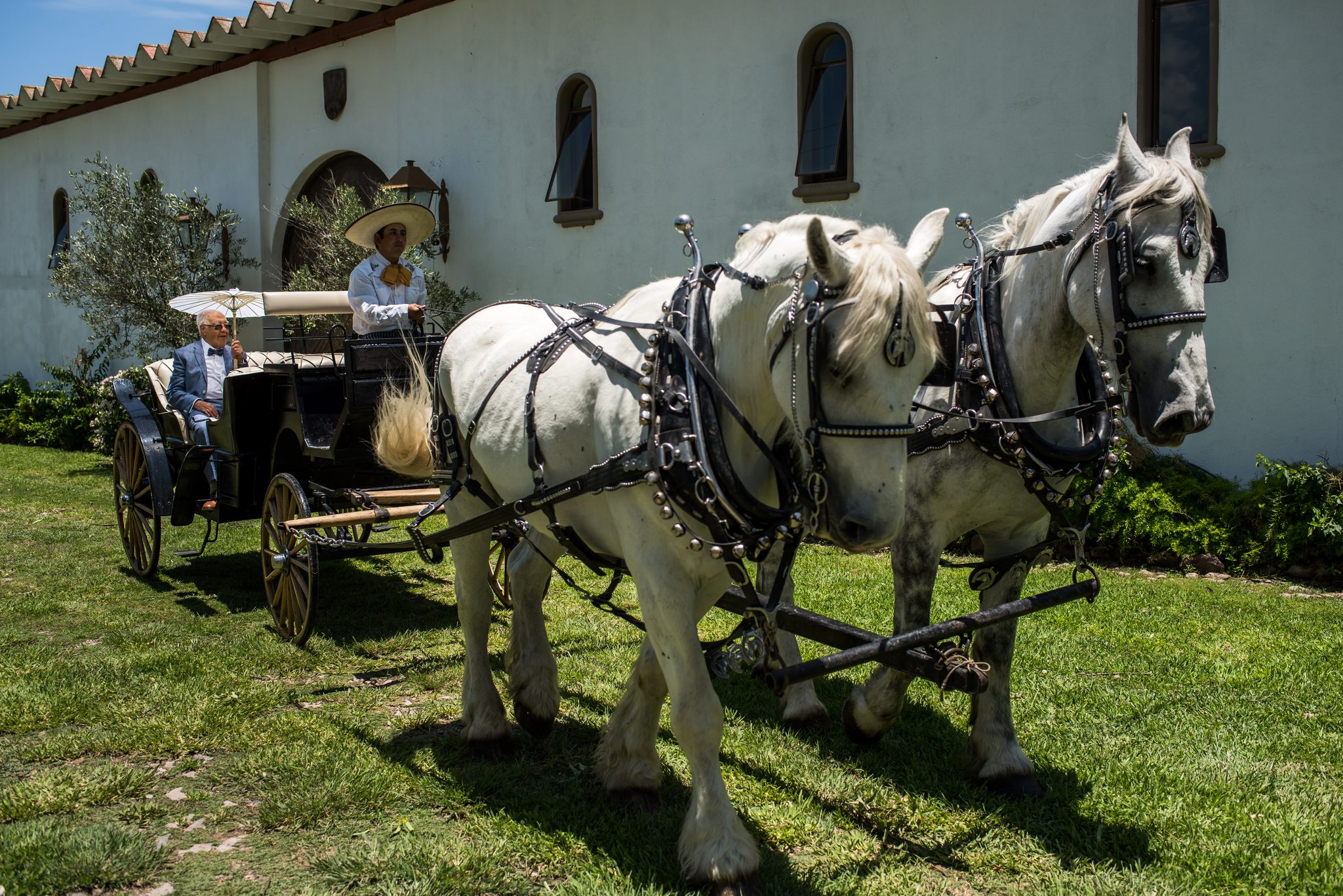
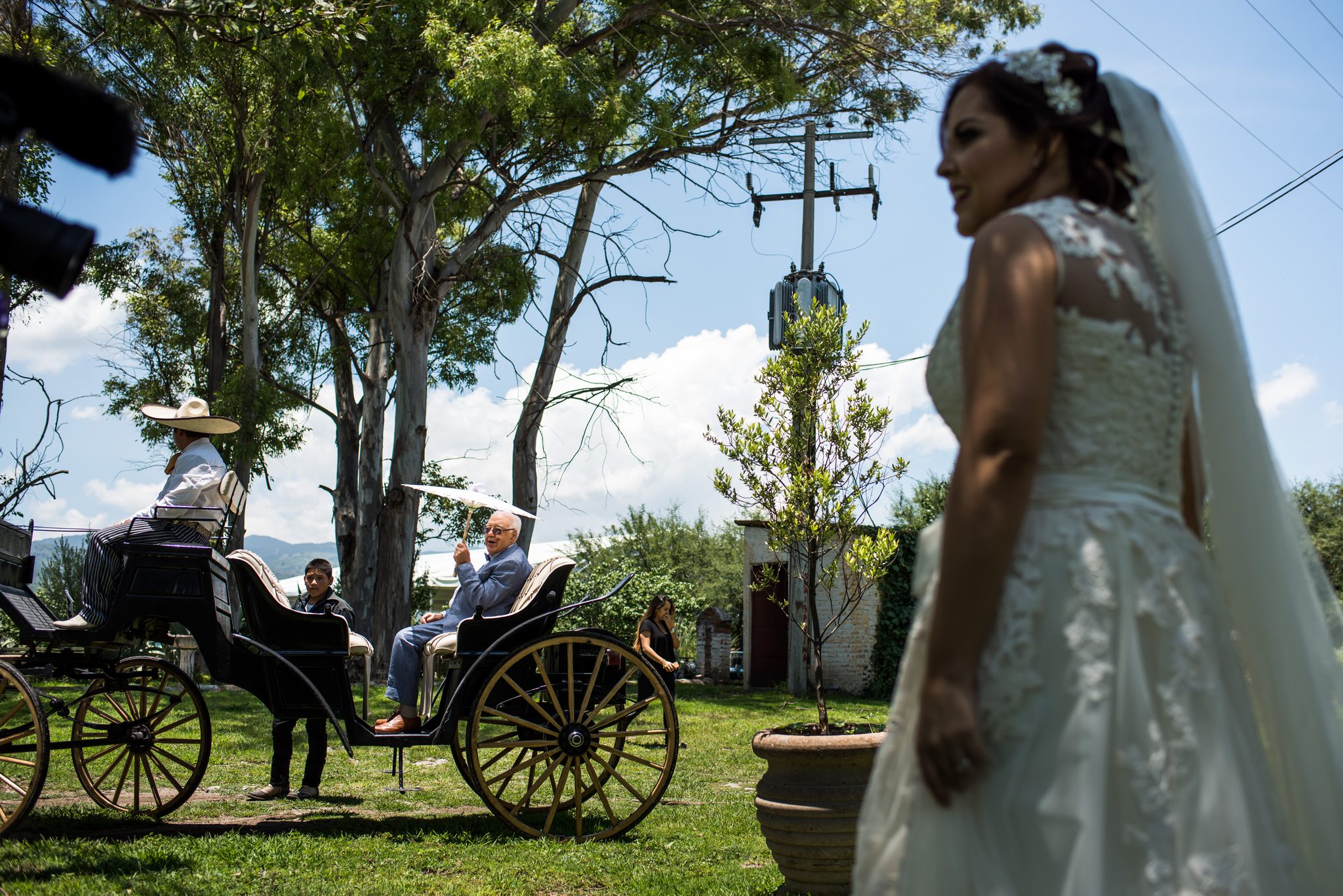
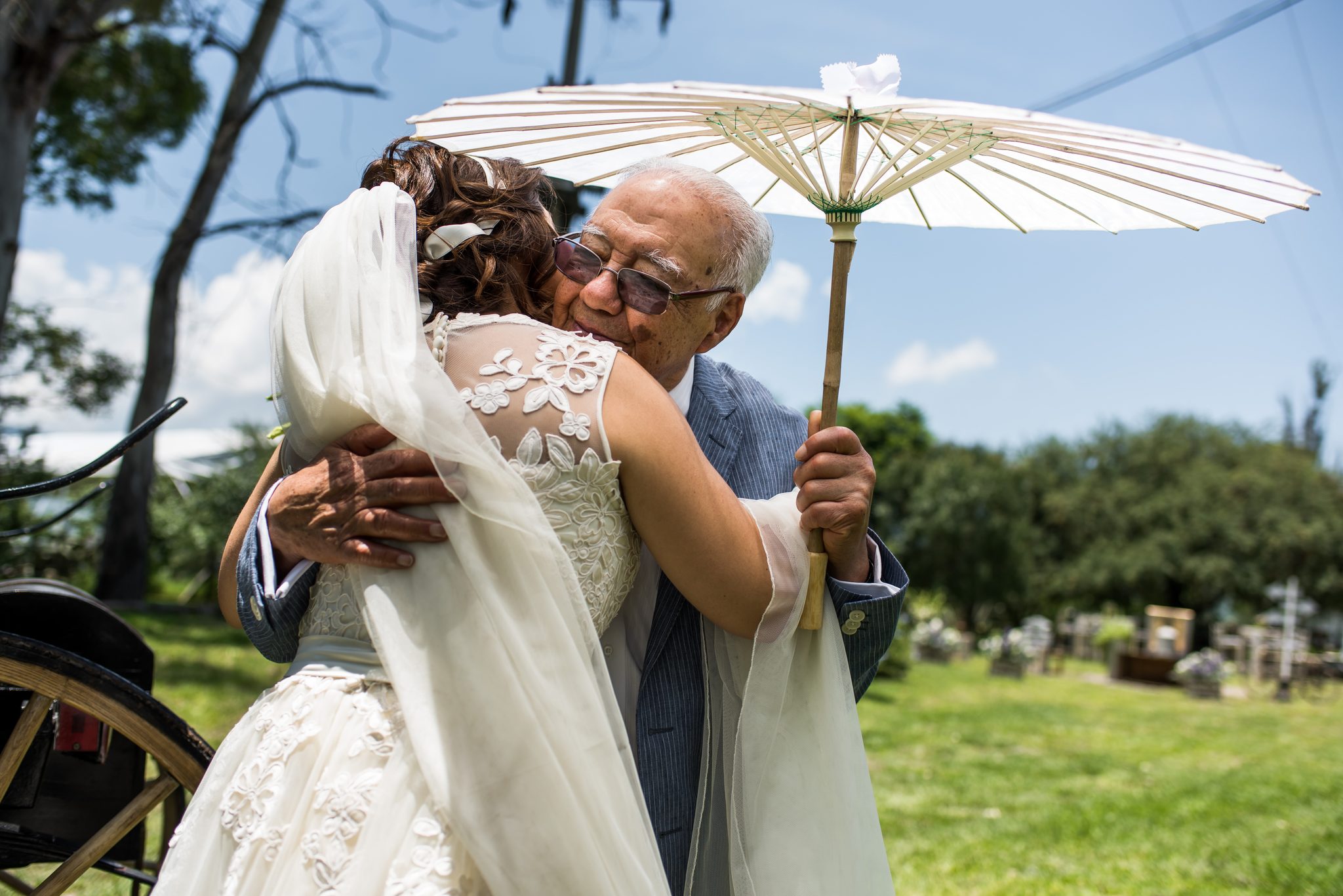
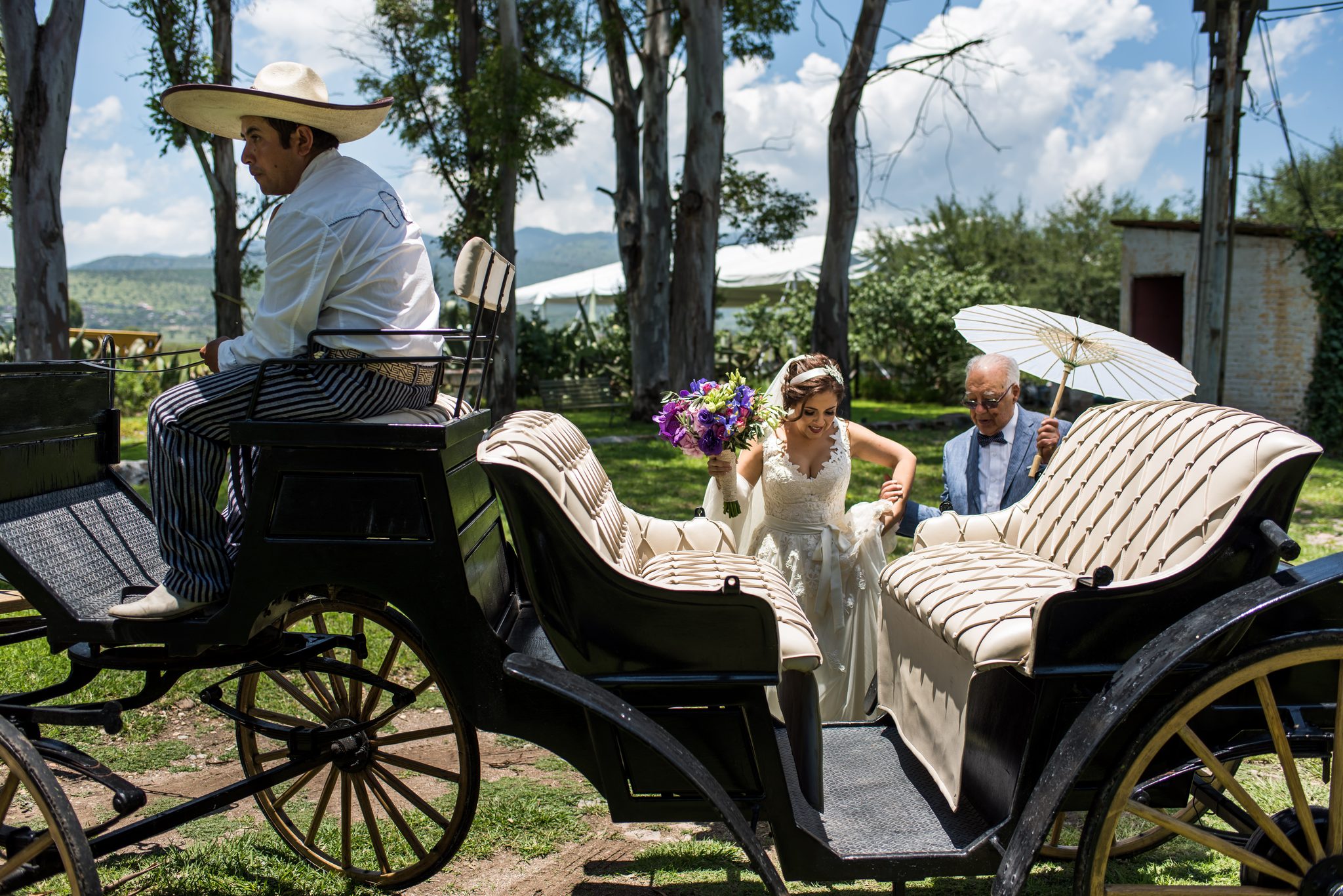
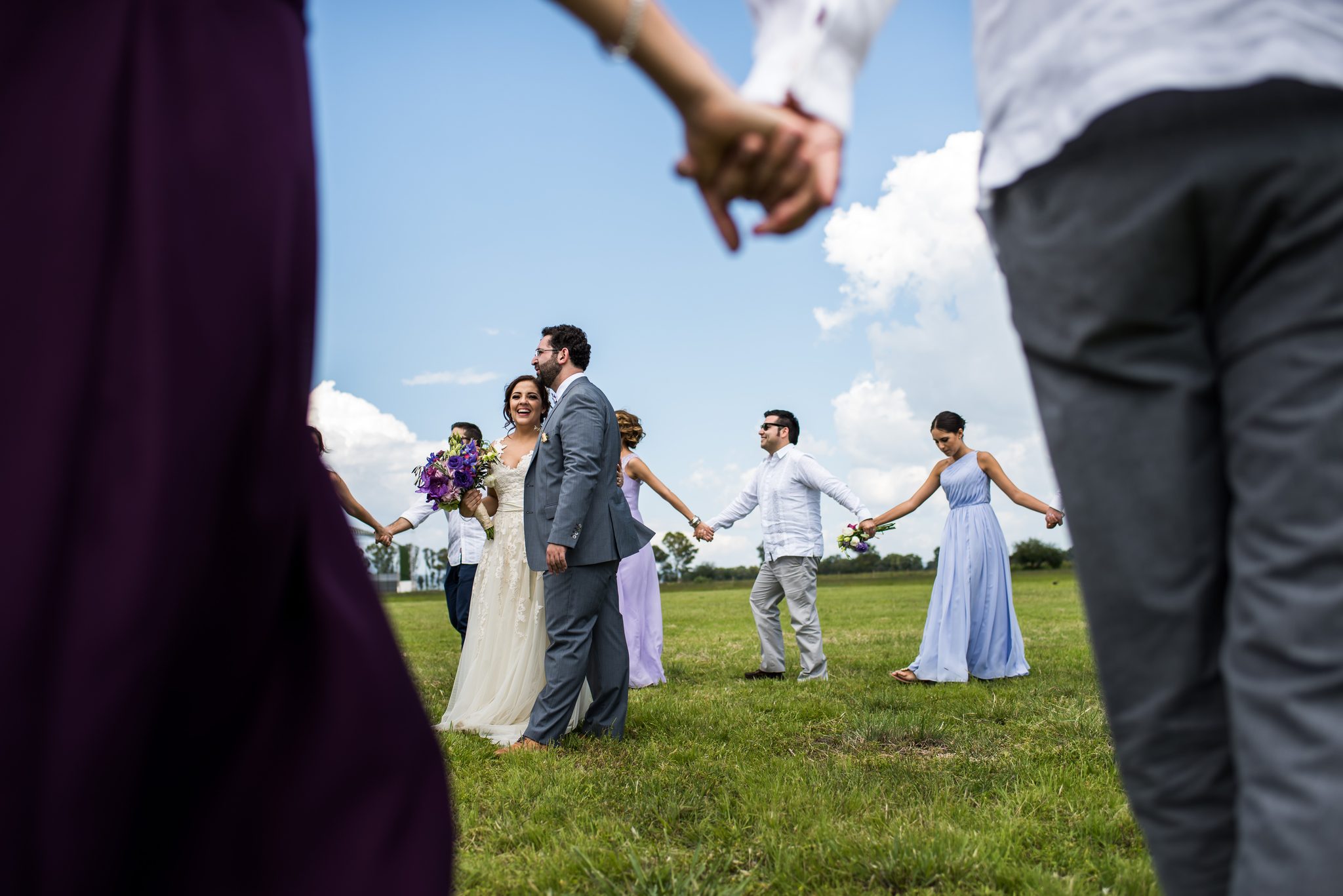
The guests waited on the grass under parasols just like his. There were tears, of course, and speeches, and the kind of attention that happens only when nobody is posing.
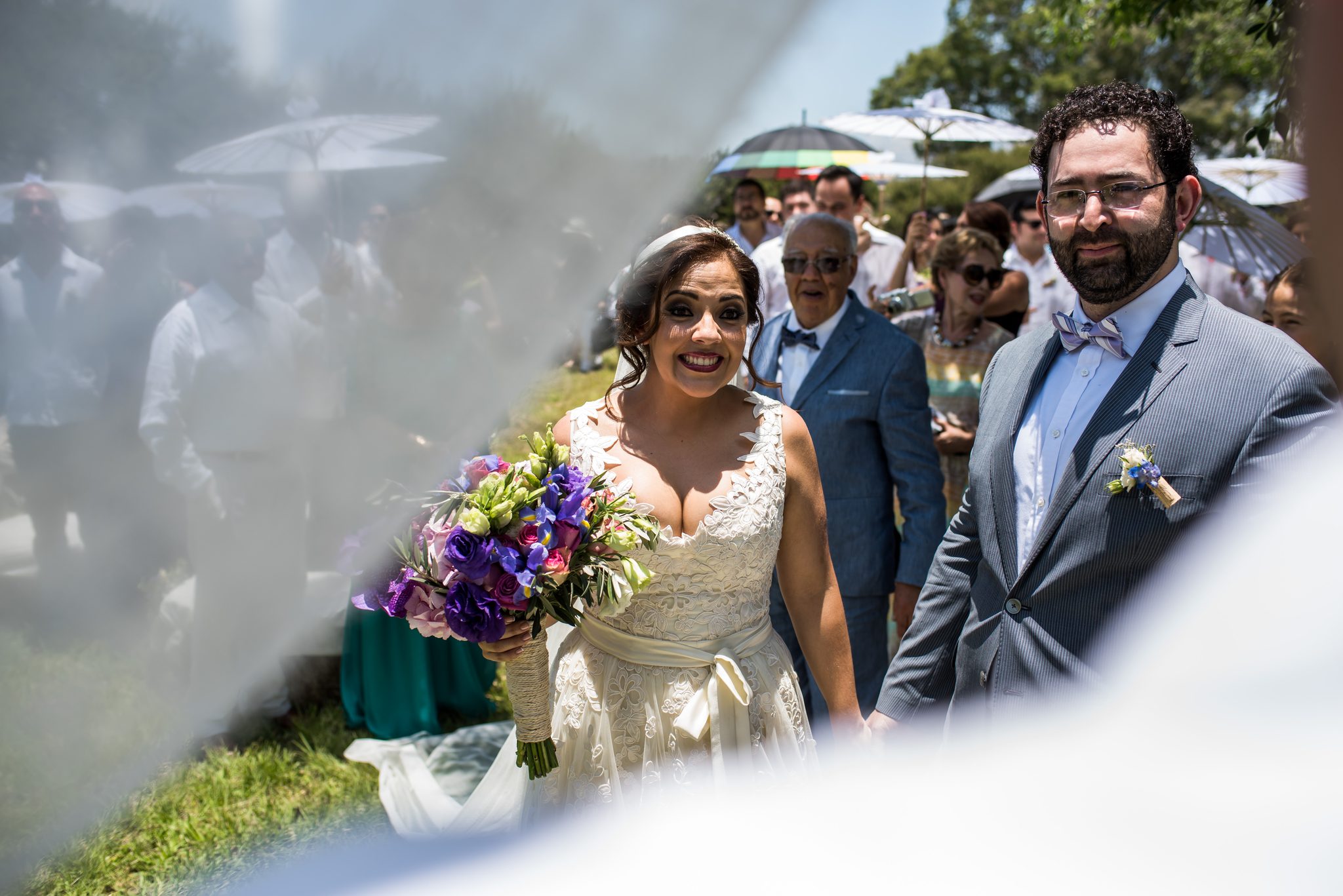
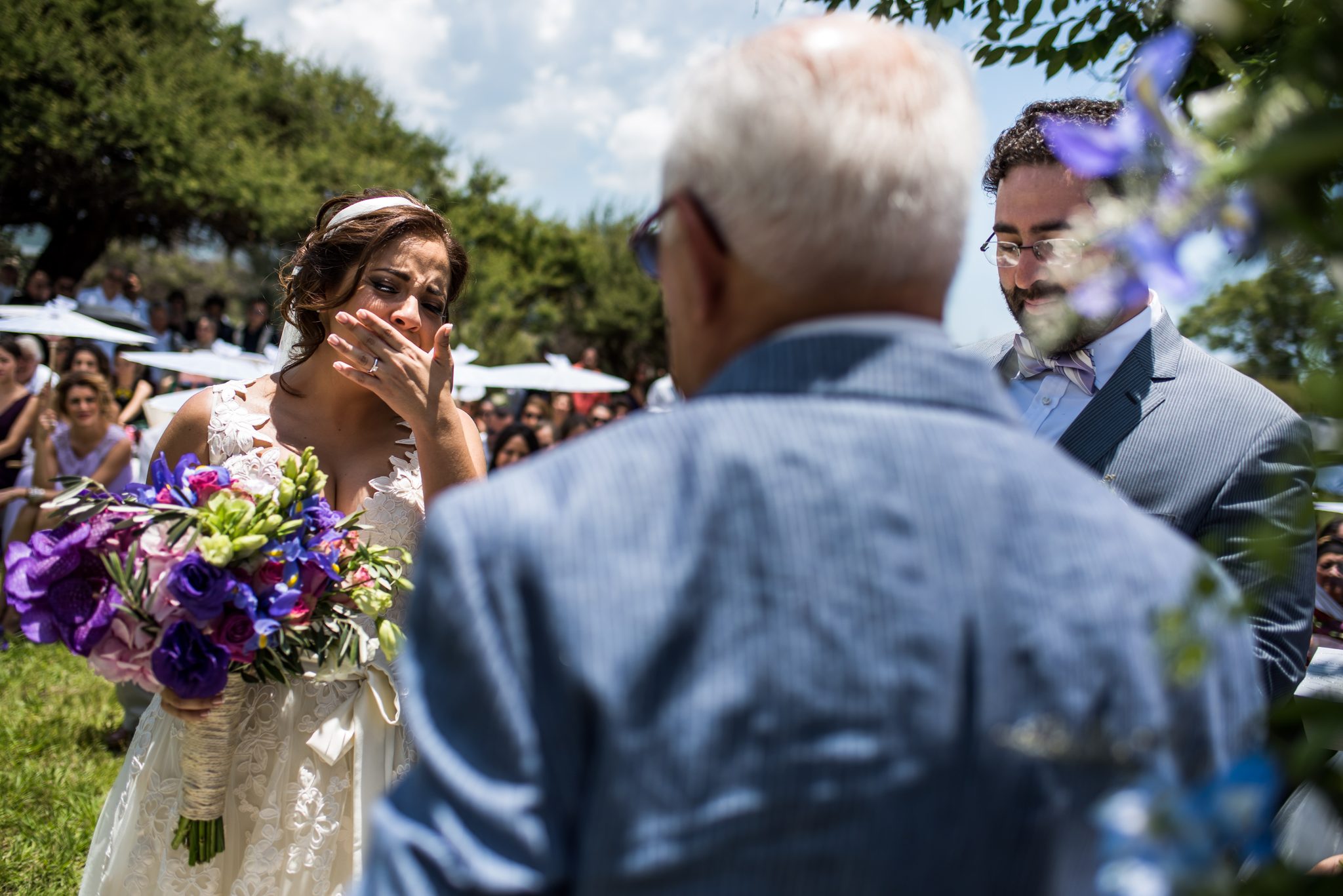
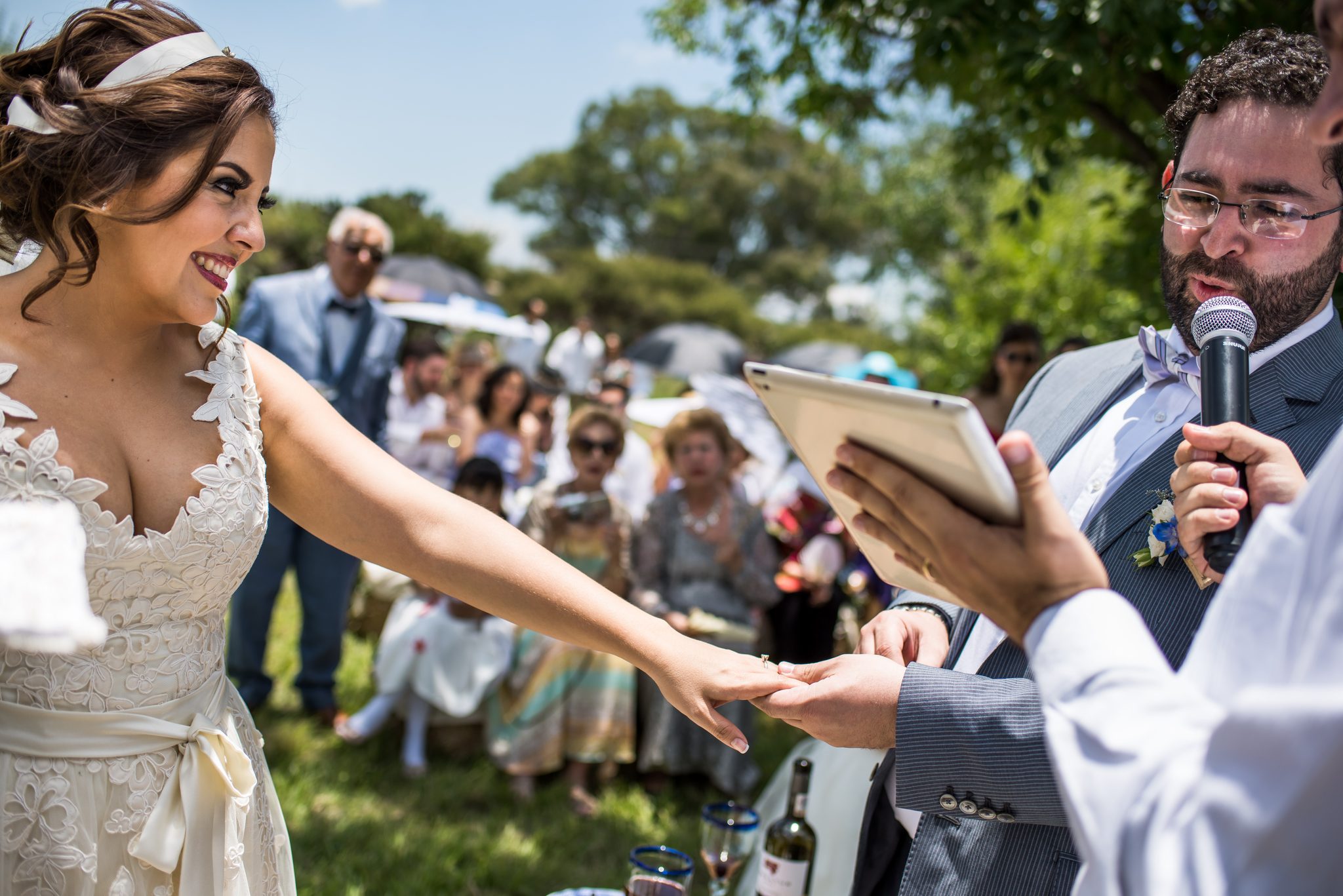
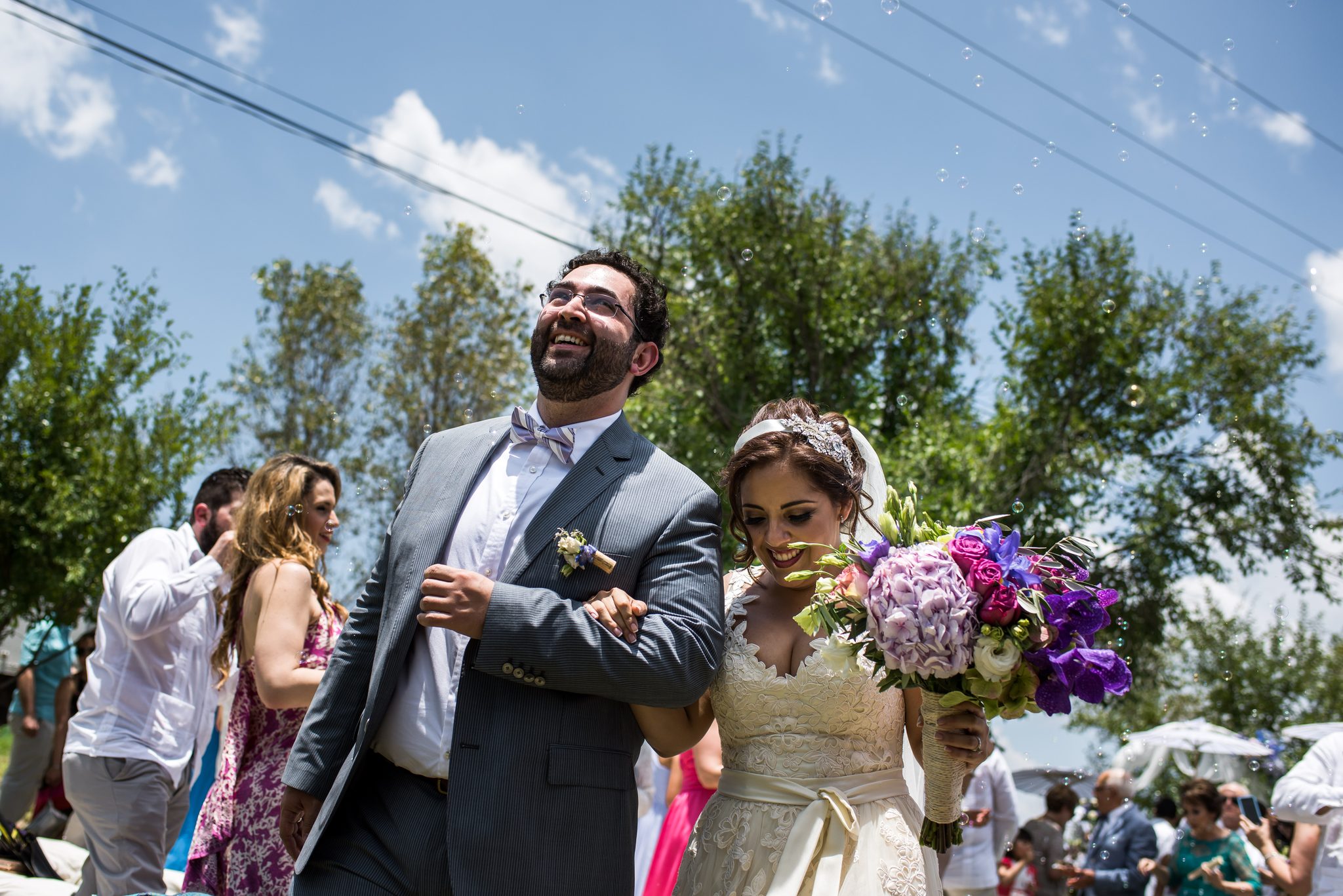
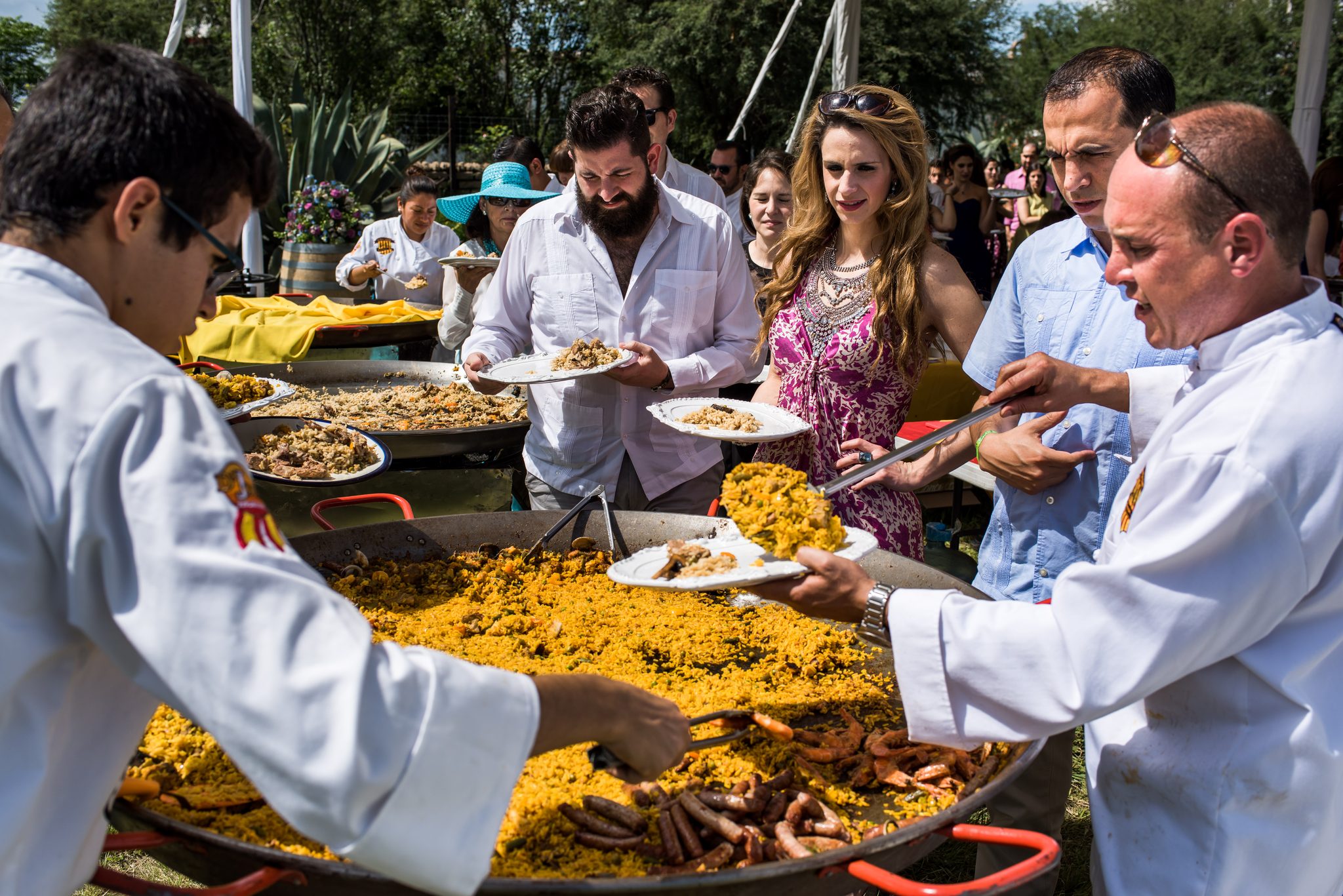
Then the part that defined this wedding: the food. Susy and Rafa love to eat, to cook and to drink well, and their wedding was built around that. Chefs served paella from enormous pans in the middle of the garden, the wine never stopped, and the tent filled up long before the first dance.
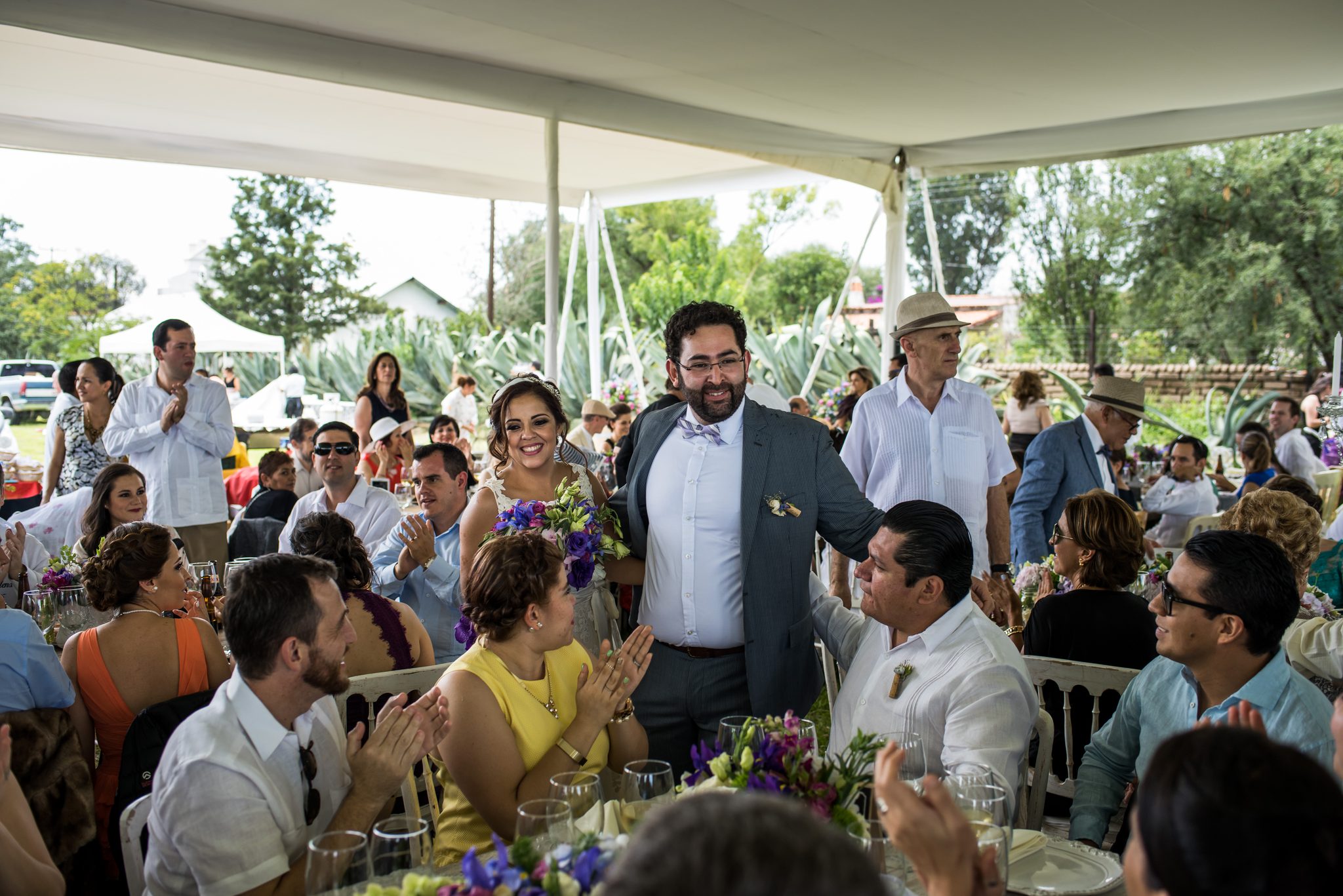
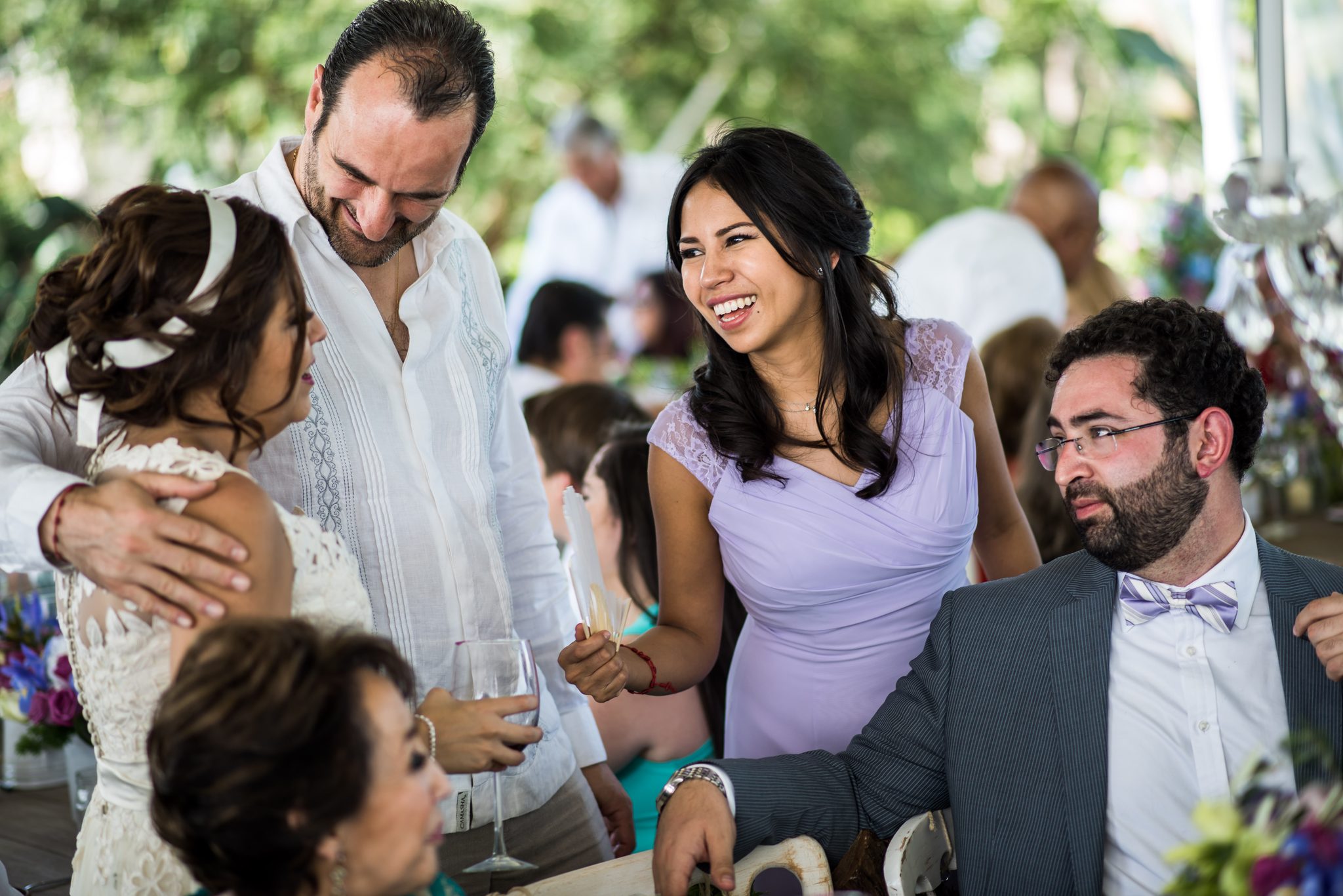
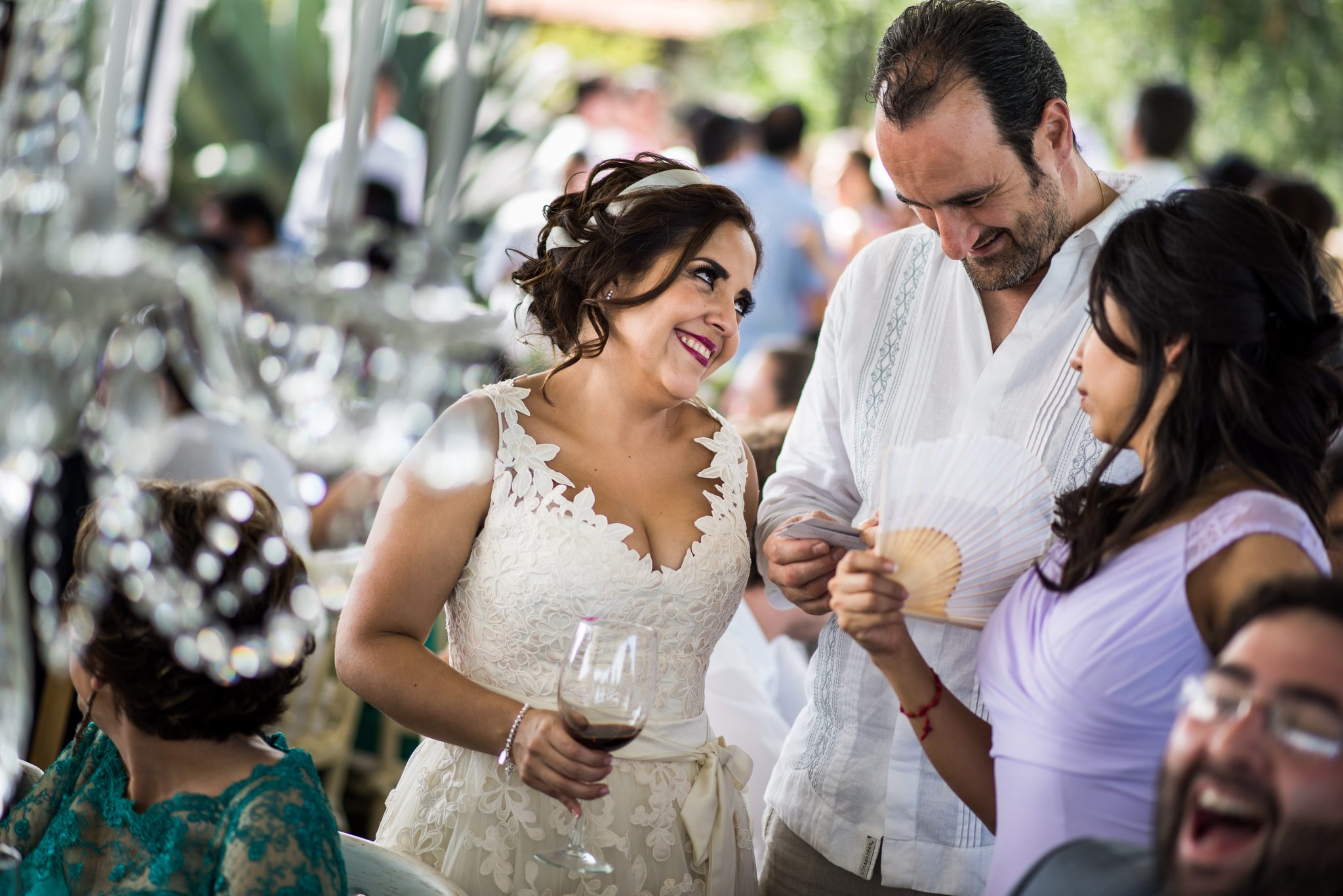
The first dances came under the tent, with the whole family on their feet.
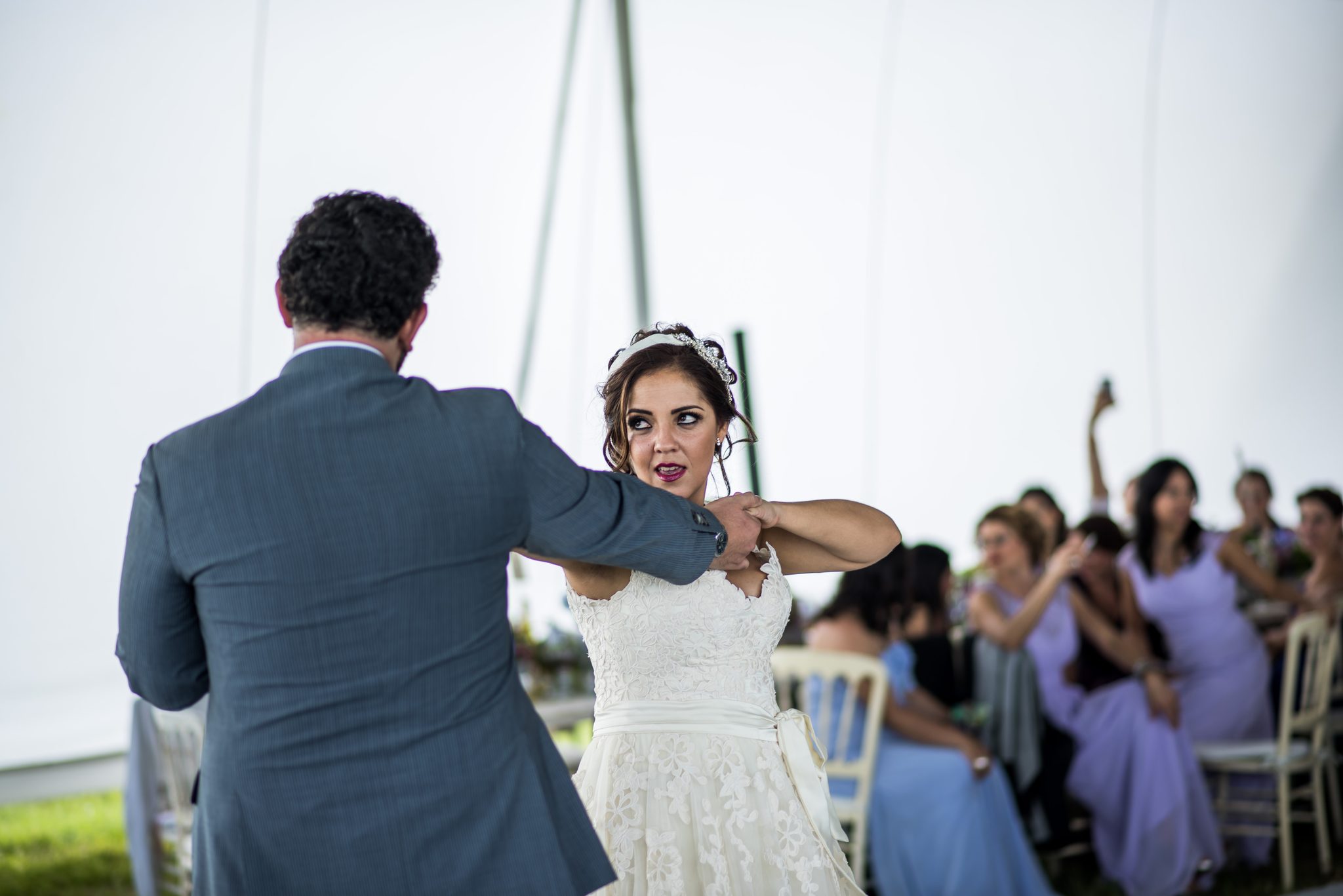
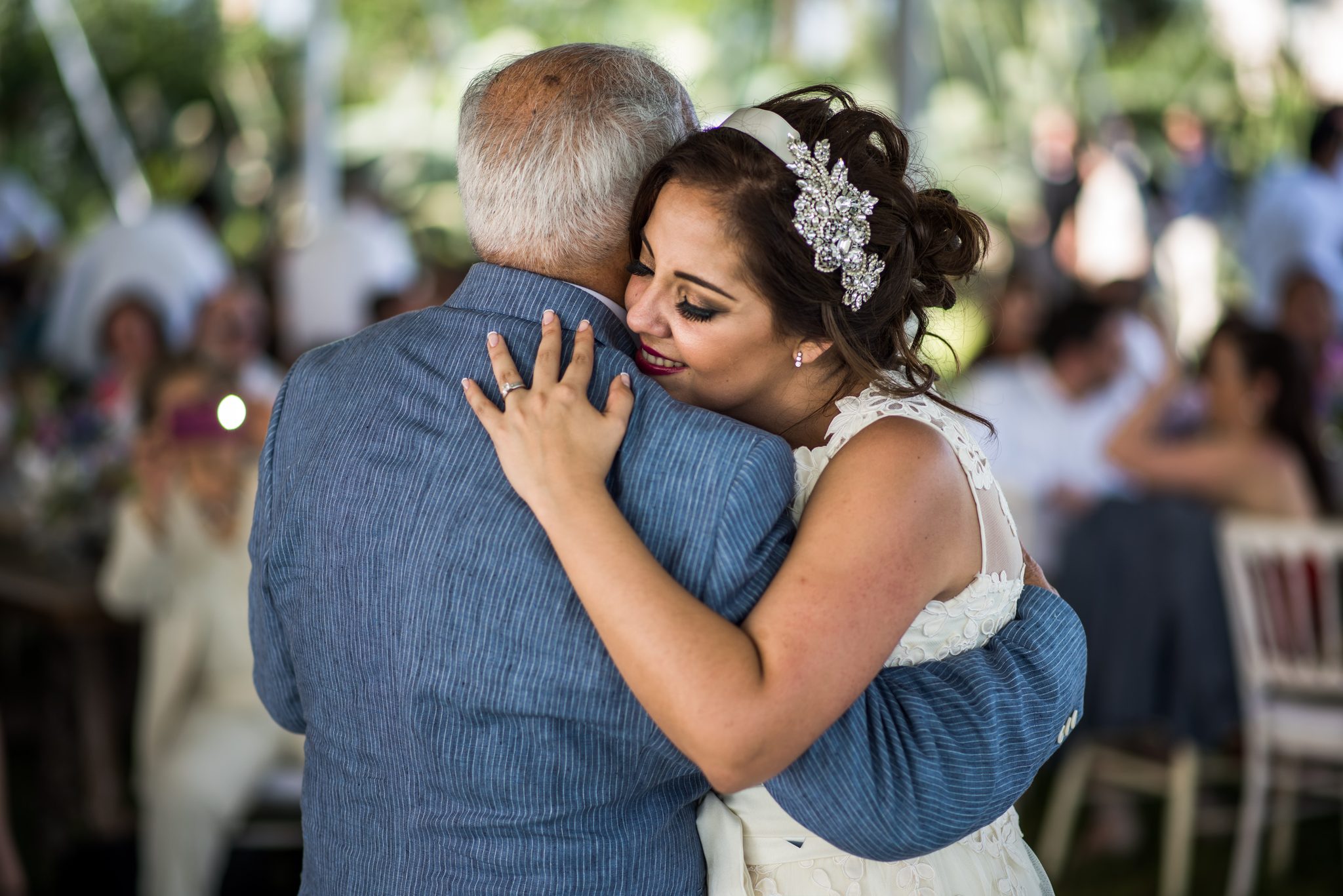
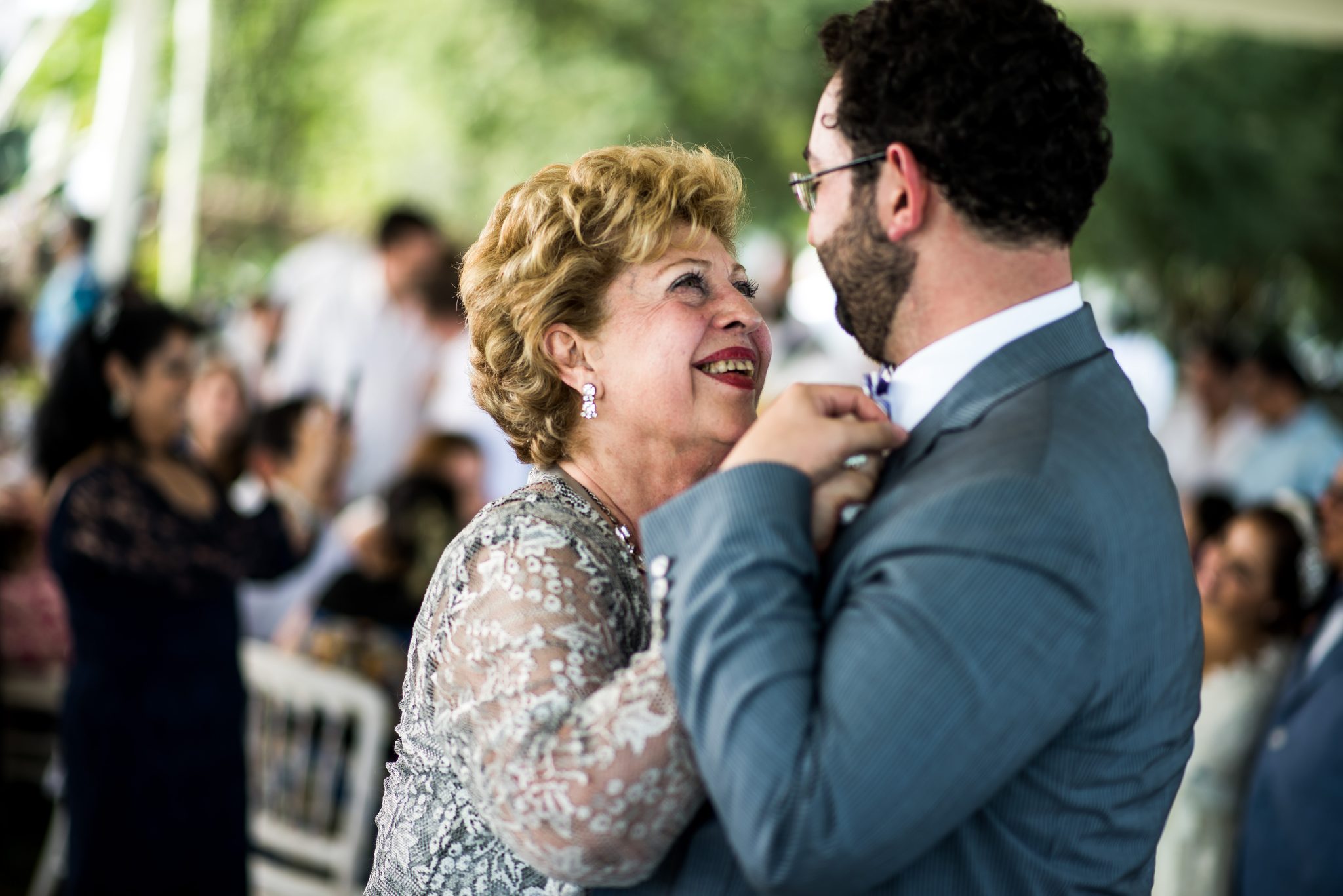
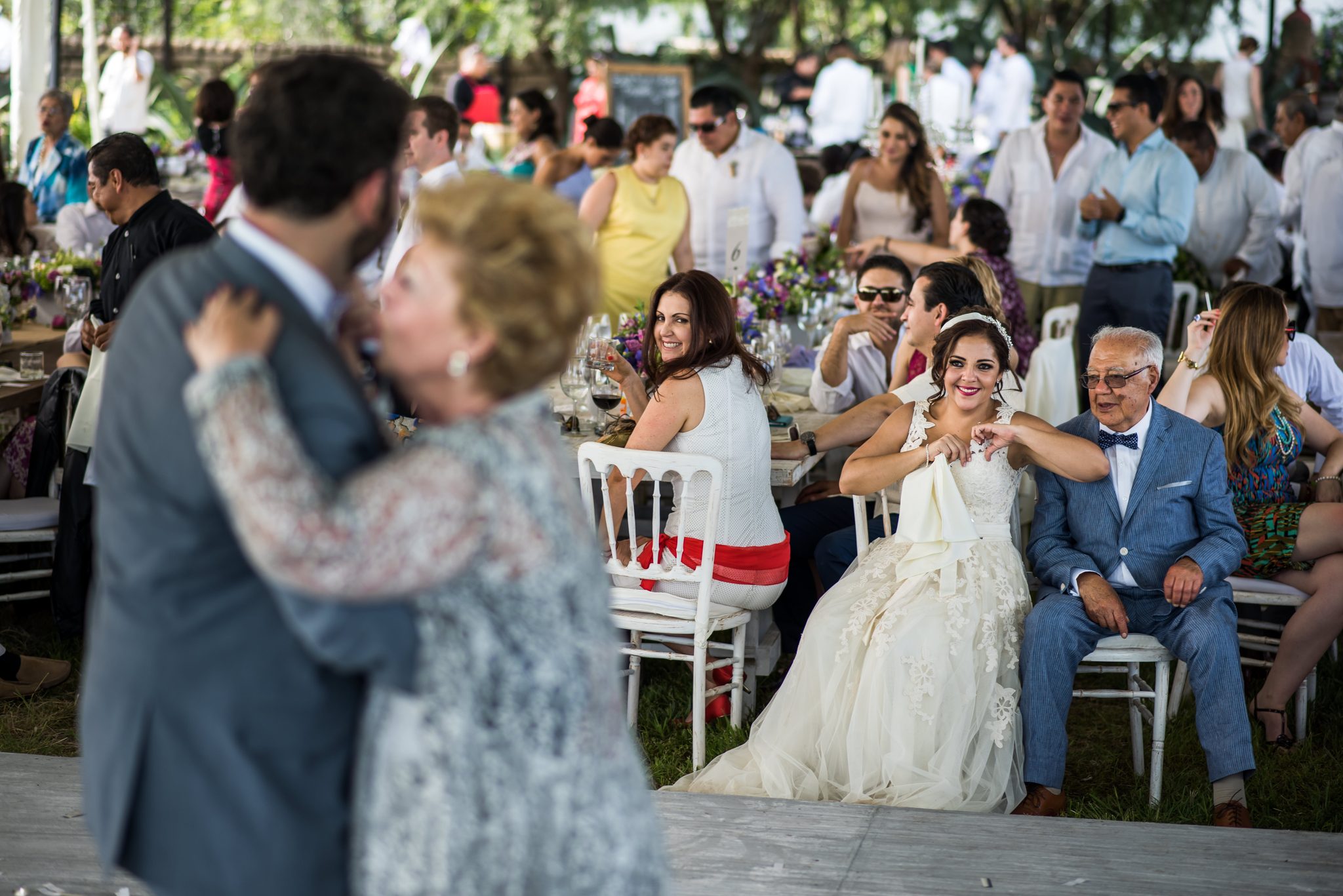
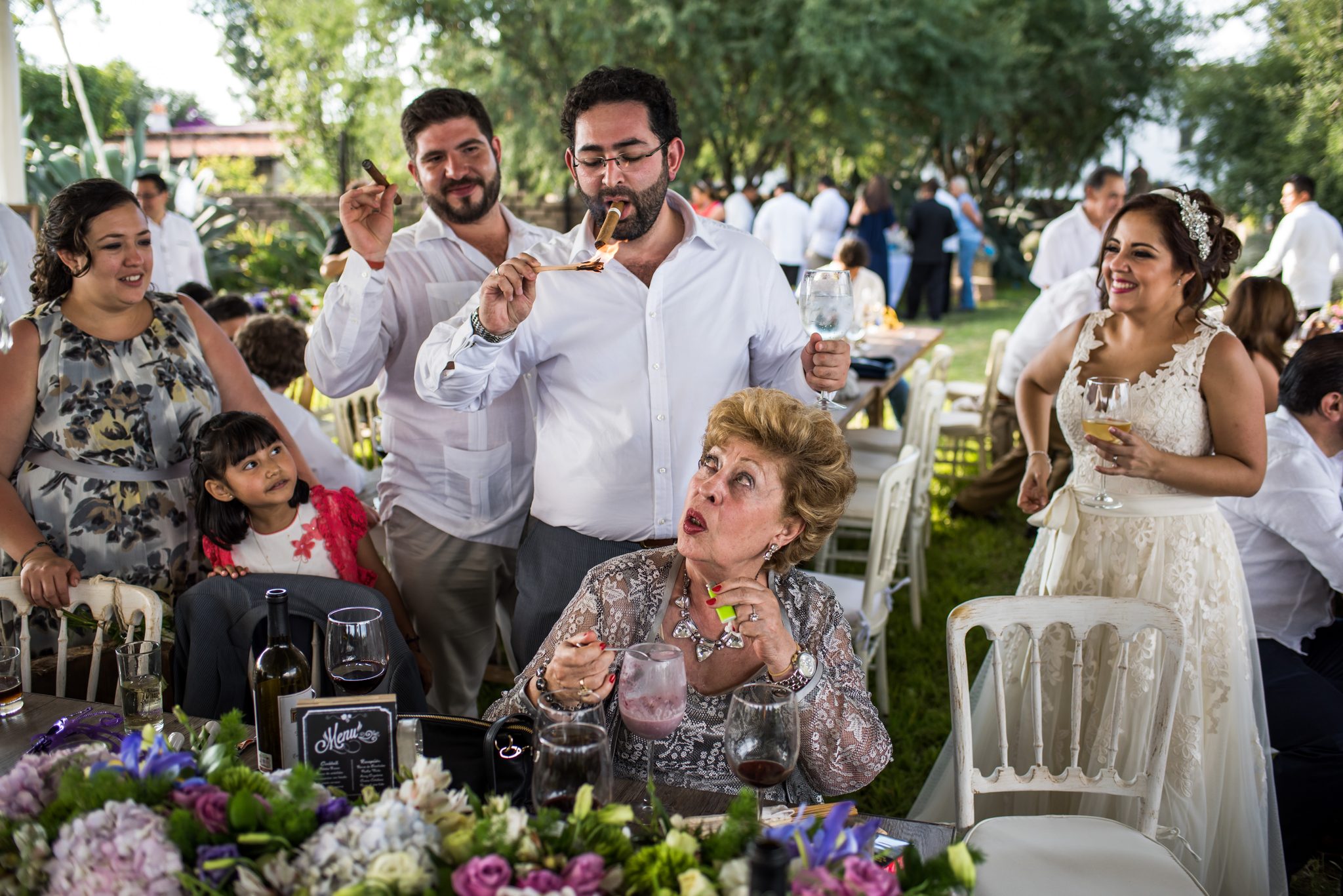
Someone lit cigars, and by night the dance floor belonged to everyone: the bouquet, the shots, the friends who forgot they were wearing their best clothes. Everybody had a blast, and you can see it in every frame.

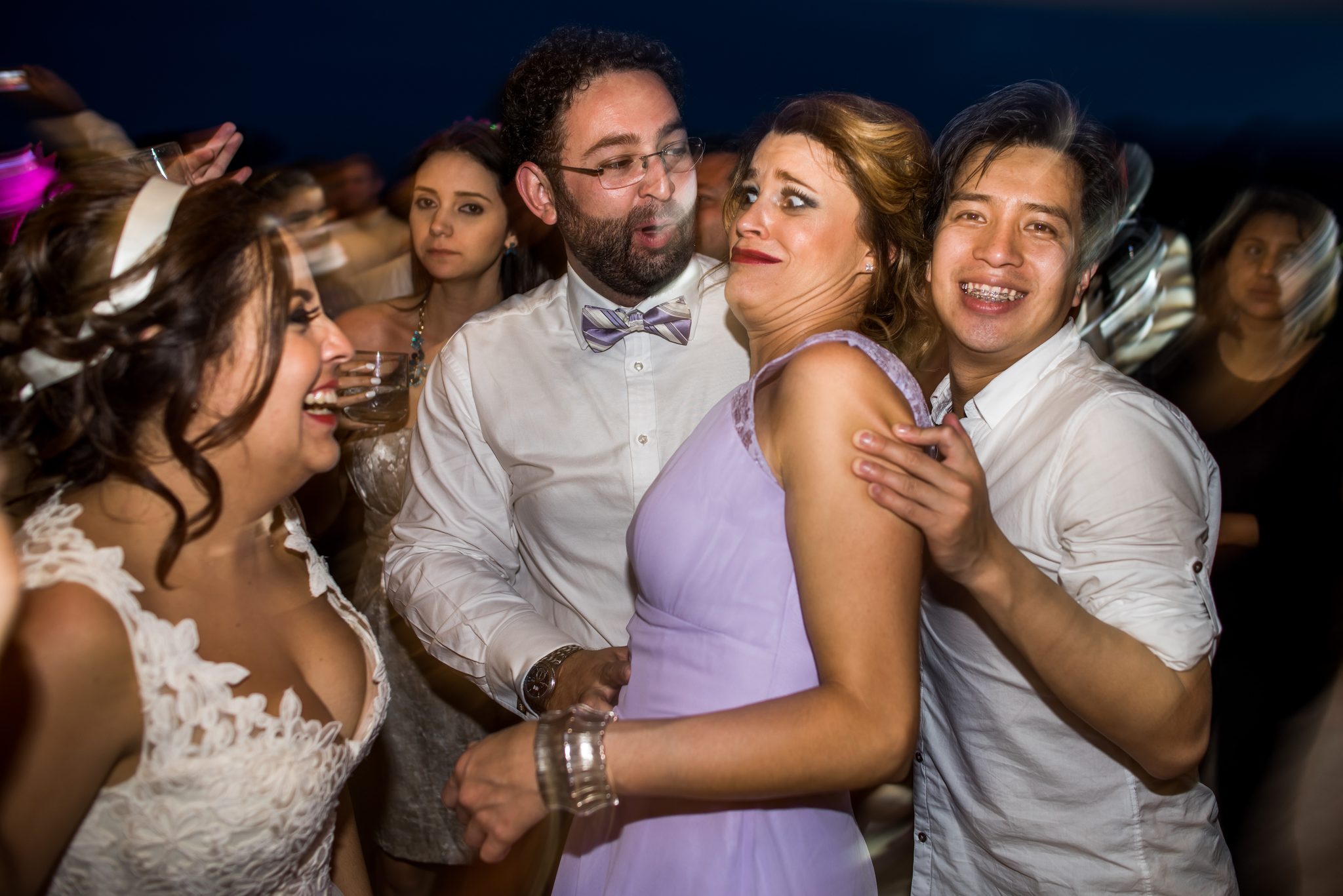
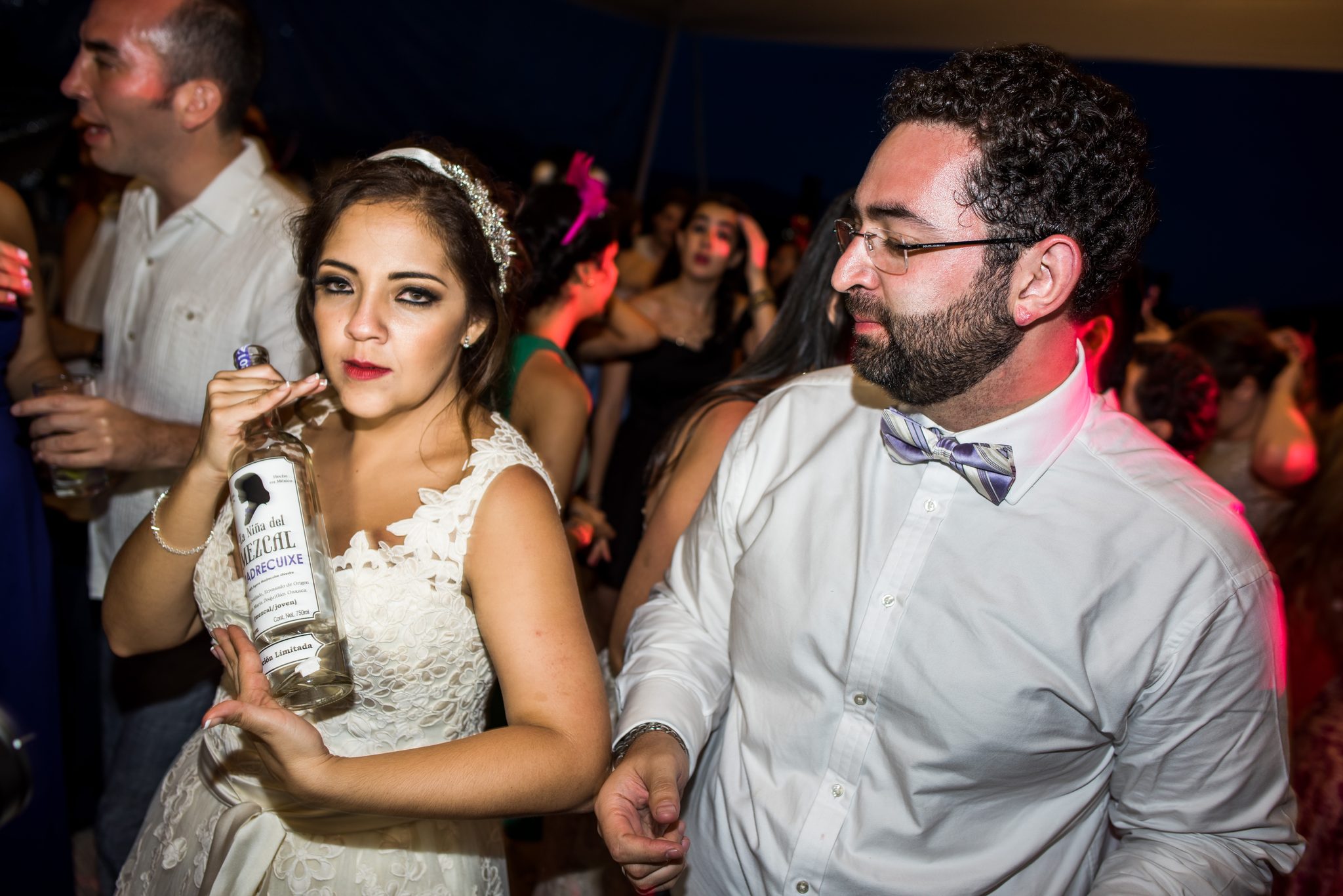
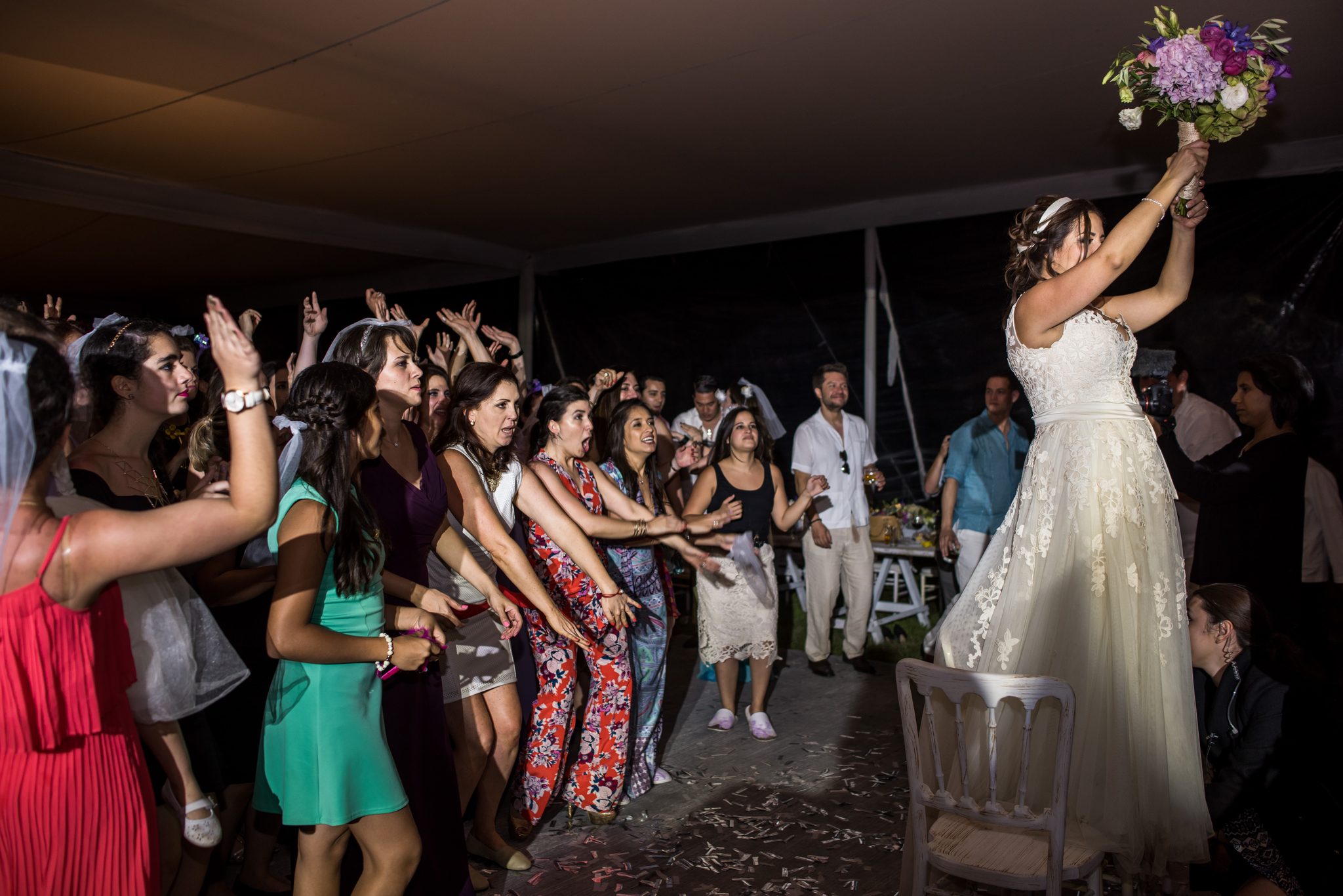
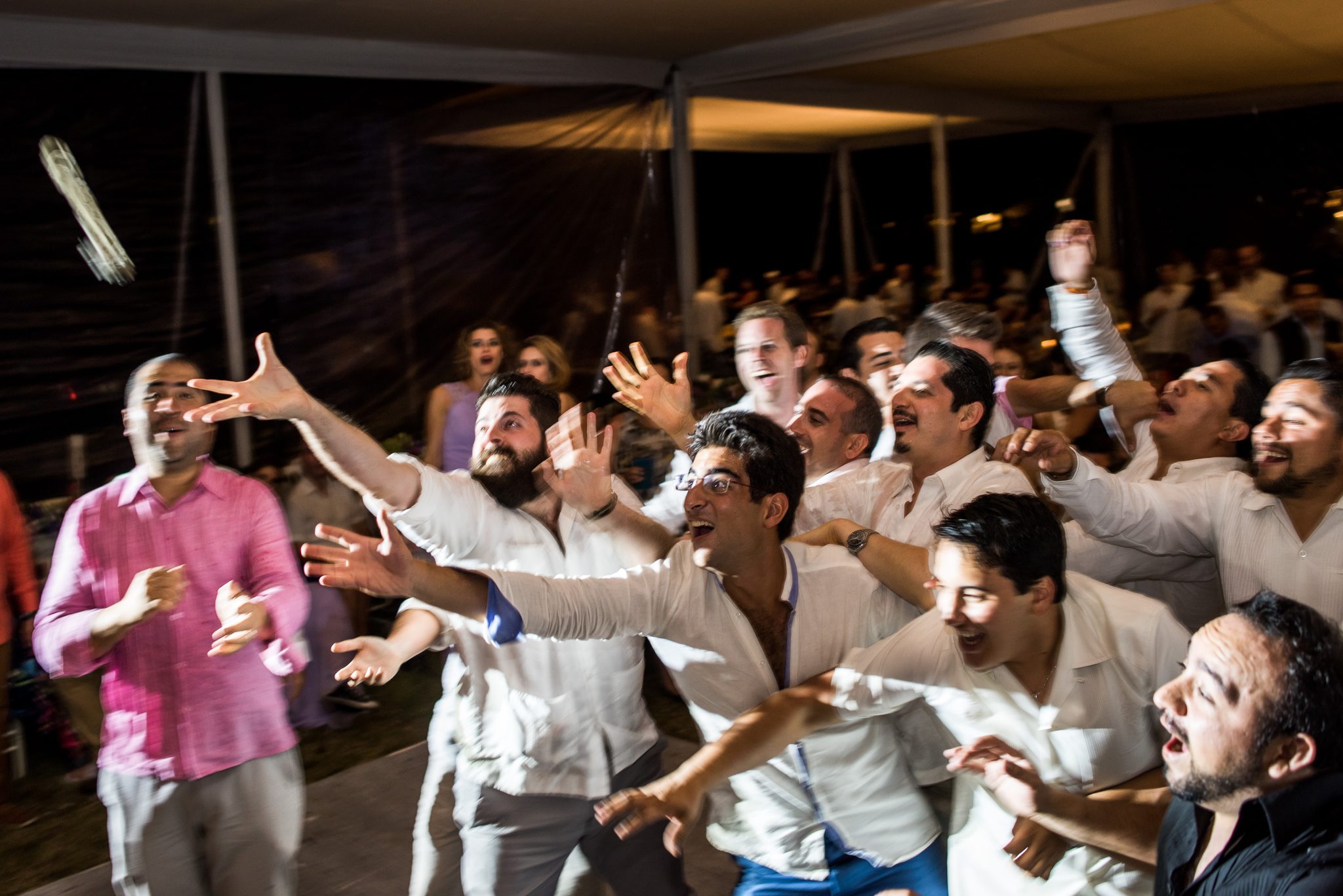
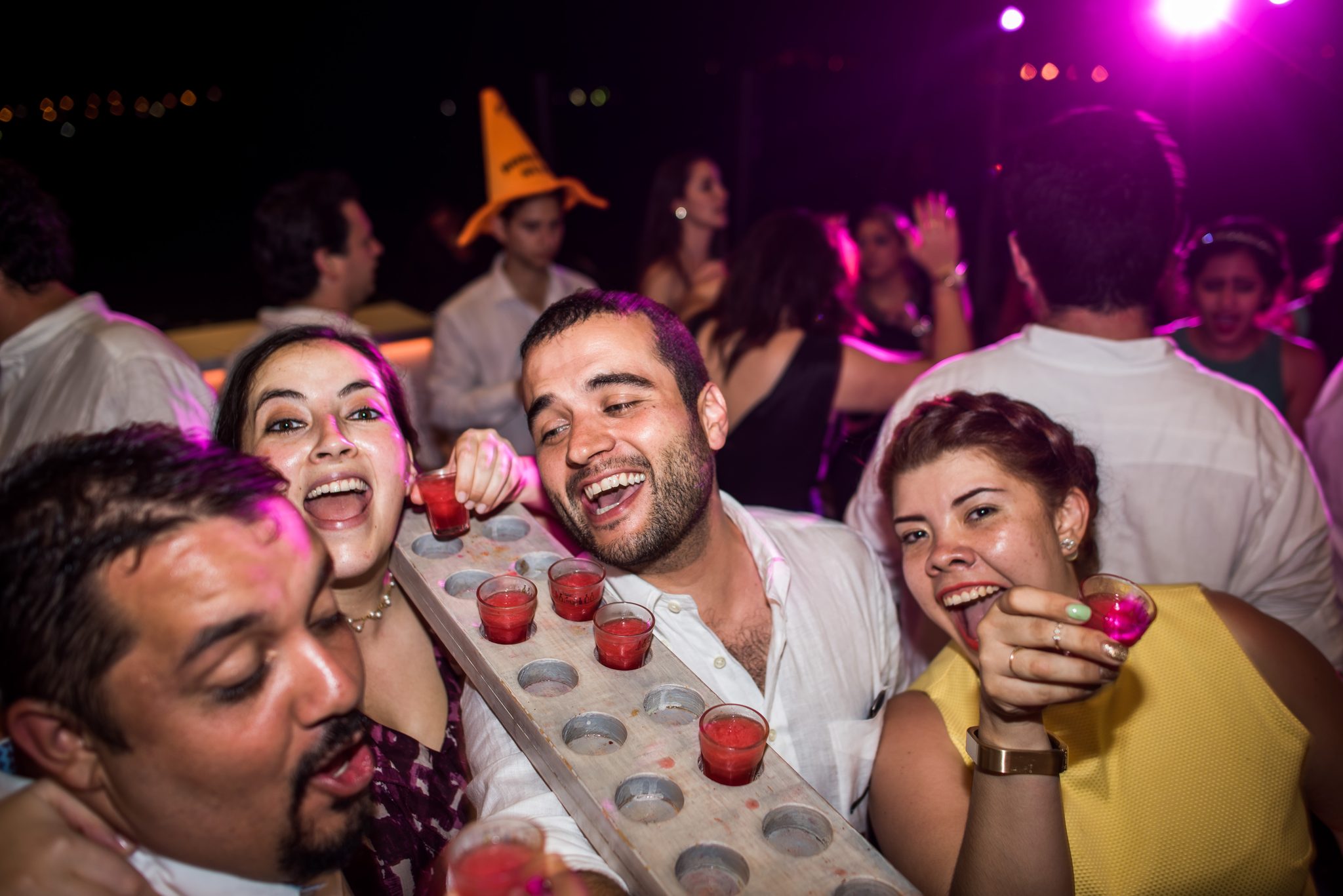
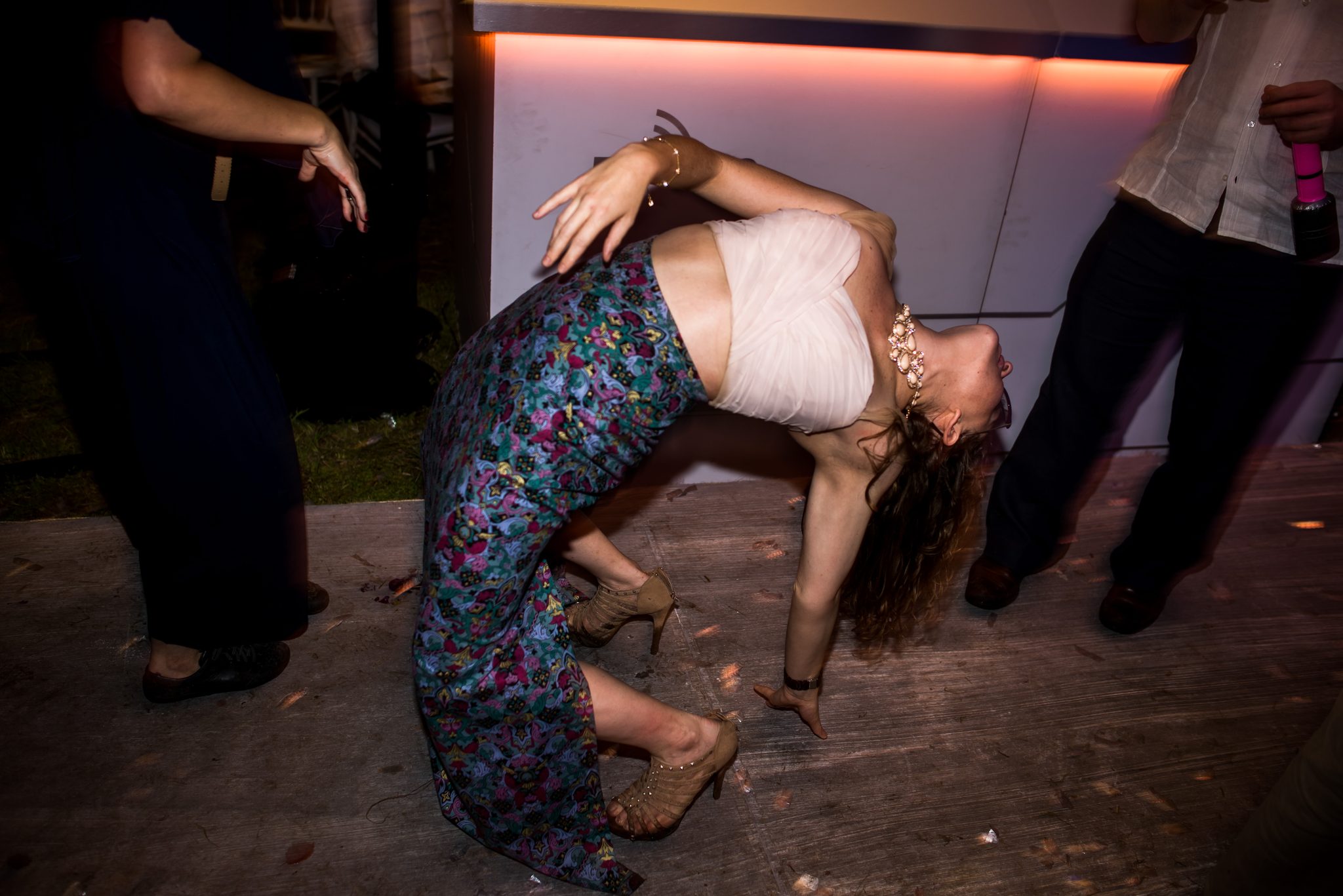
At the blue hour, the two of them stepped away for a few minutes under a tree hung with glass jars and little lights. That was the only “session” of the day, and it lasted as long as a song.
Why couples choose San Miguel de Allende for their wedding
What the town gives you before the camera does
The town does much of the work. The historic center is compact and walkable, built around the Jardín and the pink spires of the Parroquia. The streets are cobbled, the walls are thick and warm, and the colonial architecture changes color with every hour: ochre, rose, cobalt, marigold. You don’t need a set designer. You need to show up.
Guests who fly in for a weekend arrive already charmed. Within a few blocks they can shop for silver, sit in the plaza with a mezcal and walk to dinner under the lanterns, and the walk itself becomes part of the celebration. San Miguel also has a long tradition of artists, musicians and festivals, so people here know how to celebrate, and your guests tend to arrive curious and ready to take part.
The honest trade-offs of a destination wedding here
San Miguel is not effortless. The town sits at about 1,900 meters (6,200 feet), and some guests feel the altitude on the first afternoon. Cobblestones are beautiful and treacherous in heels. Hotels fill quickly in high season. A destination wedding asks more of everyone, so it’s worth asking yourselves honestly whether your guest list is ready for it. Smaller weddings and elopements work beautifully here too; sometimes the intimacy is the luxury.
San Miguel wedding venues, and what each one does to the light
The venue decides the light, and the light decides the photographs. Before you fall in love with a space, ask what it looks like at eleven in the morning, at four in the afternoon and at sunset.
Haciendas: thick walls, long shadows, ceremony drama
Haciendas are the classic choice: stone courtyards, arched corridors, chapels, gardens and room for a large tent. Low light carves deep shadows through the arches, which gives the photographs real dimension. Many can be booked as a whole property, so you control the rooms, the noise and the flow of the day. Peak dates book a year or more in advance.
Vineyards: open sky and a slower day
The countryside around San Miguel has become wine country, and a vineyard wedding feels completely different from one in town: open land, long views, rows of vines and a slower rhythm. That’s what Susy and Rafa chose. The light is wide and honest, there’s room for the party to spread out, and guests relax the moment they arrive. Plan the transport, because you’ll be outside town, and think about shade for a midday ceremony.
Gardens and courtyards: soft light, forgiving timing
Gardens are the most forgiving setting I know. Trees and bougainvillea filter the sun into something soft and even, and you can photograph at almost any hour without harsh contrast. If you’re unsure about timing, or your guests need shade, a garden gives you room to breathe.
Rooftops: the views of the city, and why the clock matters
Several rooftops look straight at the Parroquia, and at sunset, with the domes and towers in silhouette, the view is hard to beat. Rooftops are also exposed to wind, heat and sudden weather, and they usually have strict noise limits because of the neighbors. Keep the portraits inside a narrow window of light, ask for the music cutoff in writing and have a covered plan ready.
The historic center: cobbles, color and crowds
The streets give you texture and real life: vendors, passersby, children, dogs, the occasional brass band. They also give you crowds and traffic. Early morning and late afternoon are quieter, and a local planner will know which corners are calmer on your date.
How to shortlist a venue
Ask every venue four questions, and get the answers in writing:
- What is the maximum seated capacity, and does it change with a tent or a dance floor?
- What is the exact noise curfew, and does it apply to the ceremony too?
- What covered space is there if it rains?
- How many guest rooms are available on your dates?
A venue that’s perfect in March can be a puzzle in August without a covered plan.
When to get married in San Miguel de Allende
Dry season, rainy season
The dry season runs roughly from November to May: clear skies and pleasant days. April and May are the warmest months, while December and January bring cold nights, so plan heaters if you’re celebrating outdoors. The rainy season runs roughly from June to September. The storms usually come in the afternoon or evening, they can be short and dramatic, and they make wonderful photographs, but only if the venue has somewhere to go. Rainy-season dates are often easier to book.
Susy and Rafa married in summer, right in the middle of it, and they got both sides of the season: a storm at the welcome party and a bright, hot day for the wedding. The rain didn’t ruin anything. It just moved the party under the arcades and gave me some of my favorite photographs of the weekend. That’s the lesson of the rainy season: you don’t need good weather, you need a covered plan and a good attitude.
Dates that book out early
Easter week, the Independence celebrations on September 15 and 16, the San Miguel Arcángel festivities at the end of September, Día de Muertos and the Christmas and New Year holidays fill the town and raise prices. They’re also some of the most beautiful times to be here. If you want one of them, book your venue and room blocks early.
A wedding by daylight
Here is something that makes San Miguel different from most of Mexico. In much of the country, weddings start late and the celebration lives at night. In San Miguel, most couples get married during the day. That means many more hours of natural light than at the average Mexican wedding: the ceremony, the lunch, the toasts and the first dances all happen in daylight, and the party slides into the evening with the sunset. For a photographer it’s a gift, and for the guests too: you see the faces, the colors, the landscape. It’s simply beautiful.
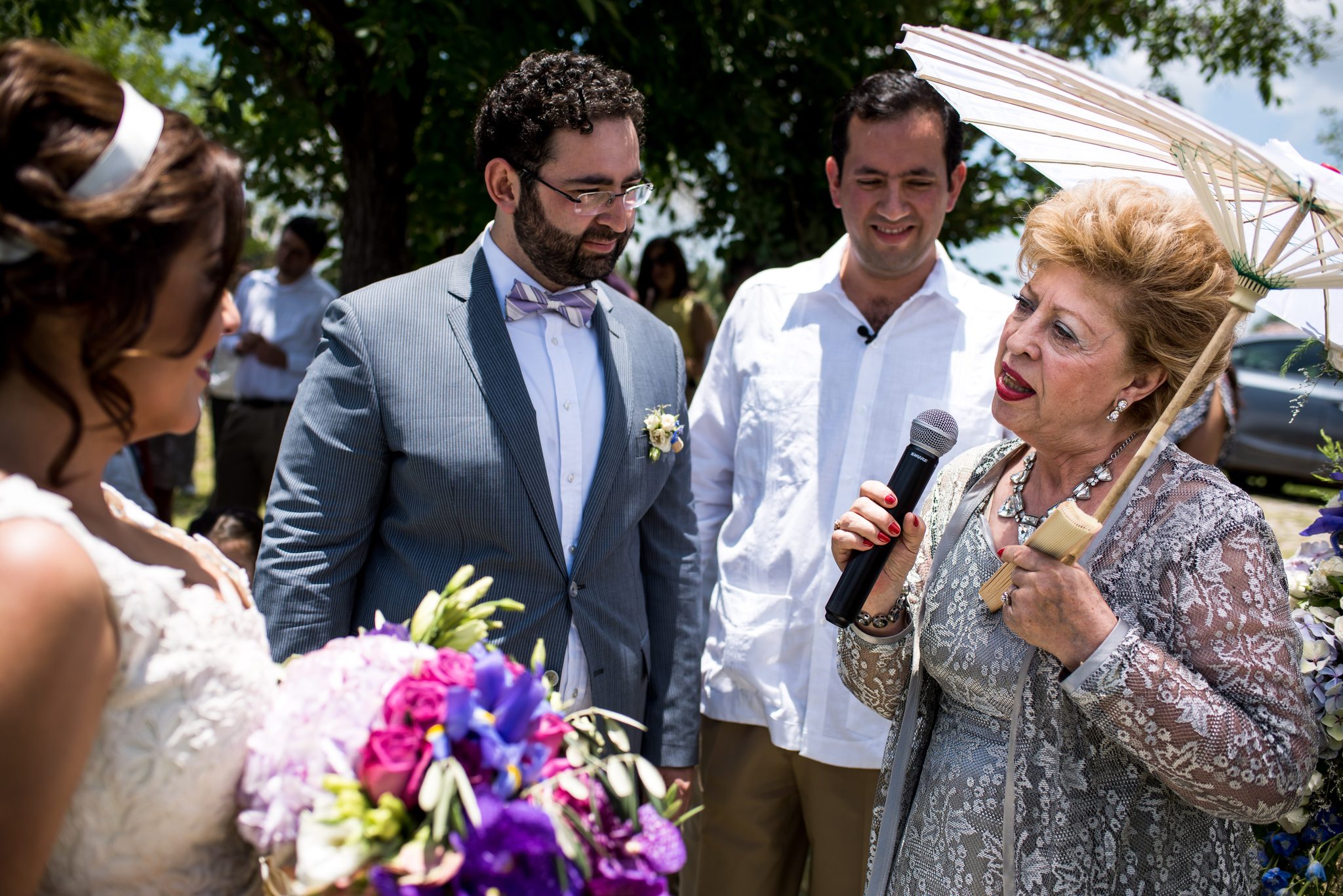
Golden hour, the hour before sunset, is when the town and the countryside glow. If the celebration is already underway, two people can step away for ten minutes and come back before anyone misses them. A midday ceremony, like Susy and Rafa’s at one o’clock, works too: it leaves the whole afternoon and evening for the celebration. You just need shade for the guests (their white parasols were a beautiful solution) and a photographer who knows how to work with hard light instead of hiding from it.
Traditions worth building into the day
The callejoneada
The callejoneada is San Miguel’s signature: musicians lead the couple and the guests through the streets, singing and dancing, often with mojigangas, the giant papier-mâché puppets, and the whole town watching. It’s joyful and unpredictable, and it’s one of the best sources of real photographs I know. Plan the route and the permits with your planner, tell your guests to wear comfortable shoes, and agree on a rain plan: in the rainy season, the arcades around the Jardín can save the night, as they did for Susy and Rafa.
The welcome party and live music
For destination weddings, the weekend matters as much as the day. A welcome party or casual dinner the night before lets guests meet each other, and by the wedding they already feel like a group. It’s also where some of the most relaxed photographs happen, because nobody is dressed up yet and nothing is supposed to go perfectly. Live music, whether it’s mariachi, a trio or a full band, is part of the culture here; leave room for it in the timeline.
Planning a destination wedding in San Miguel de Allende from abroad
Getting there
The closest airport is Querétaro, a little over an hour by road. León (Bajío) takes about an hour and a half, and Mexico City three and a half to four hours. Arrange transfers in advance, especially if guests land on the same flights, and share a short list of hotels at different prices so they book early.
Legal or symbolic ceremony
Only a civil ceremony at the Registro Civil makes a marriage legal in Mexico. Many couples do the legal part in a simple setting and then hold a symbolic ceremony with a bilingual officiant. Foreign documents usually need an apostille and a certified Spanish translation, and requirements change, so confirm the current list with the Registro Civil and your planner, and start early.
A scouting trip in 48 hours
If you can visit only once, plan it like a sprint: three venue visits, one tasting, one meeting with the planner and, if you can, a coffee with your photographer. Ask every venue to show you the rain plan and the staff entrance. Film short walkthroughs on your phone to compare later. And save an afternoon just to walk: how a place feels at five in the afternoon tells you more than any sales tour.
Wedding planners, timelines and when to book your photographer
A good local planner is the person who knows the permits, the vendors who answer the phone and the streets that flood in July. Destination wedding planners in San Miguel are used to couples planning from another country and another time zone.
Twelve months out, choose the date, the venue and the photographer. Many couples leave the photographer until six months before; for a documentary photographer, that’s usually too late. Nine months out, plan the legal ceremony and the guest logistics. Six months out, send the save-the-dates and lock the room blocks. Three months out, finish the documents and the menu. In the last month, confirm the final numbers, the transport and the timeline with every vendor.
Planning a day that photographs itself
Designing for documentary work instead of fighting it
The best wedding photographs are rarely posed. They happen when people forget the camera is there. Cartier-Bresson called it the decisive moment: you can’t schedule it, but you can make room for it. Leave gaps in the timeline. Let guests drift between spaces. Don’t build a shot list around every archway in town; choose one or two moments that matter to you, like a walk through the Jardín at golden hour, and let the rest happen.
What to skip, what to protect, what to leave open
Skip the long receiving line and the list of group photos that pulls everyone away from the party. Protect a short window of good light for the two of you. Leave the rest open for the conversation nobody planned, the grandmother dancing in a doorway, the child who wanders into the frame, the storm that sends everyone under the arcades.
A note to the couple
That’s what Susy asked for in her first email: not magazine photos, but photographs that bring back what she felt. San Miguel is not a backdrop. It’s the reason your guests will arrive full of wonder and the reason the day will feel like no other. Plan with care, leave room for surprise, and let the people you love fill the day with themselves. I’ll be there, quietly paying attention, ready for the moment you forget I’m in the room.
If you’re planning a wedding in San Miguel de Allende, you can see more of my work in Weddings, read how I work, or write to me.
More from the journal

Wedding story · Valle de Guadalupe, Ensenada
Mexico Vineyard Wedding at Bruma
Getting married in a vineyard surrounded by breathtaking landscapes is an amazing experience: Lucila and Jorge’s wedding on the Valle de Guadalupe wine route.
Read the story

Wedding story · Ethnobotanical Garden, Oaxaca
Oaxaca Destination Wedding
An inspiring, colorful and folkloric celebration with the traditional Mexican Calenda street parade, and a reception at the Ethnobotanical Garden of Oaxaca.
Read the story